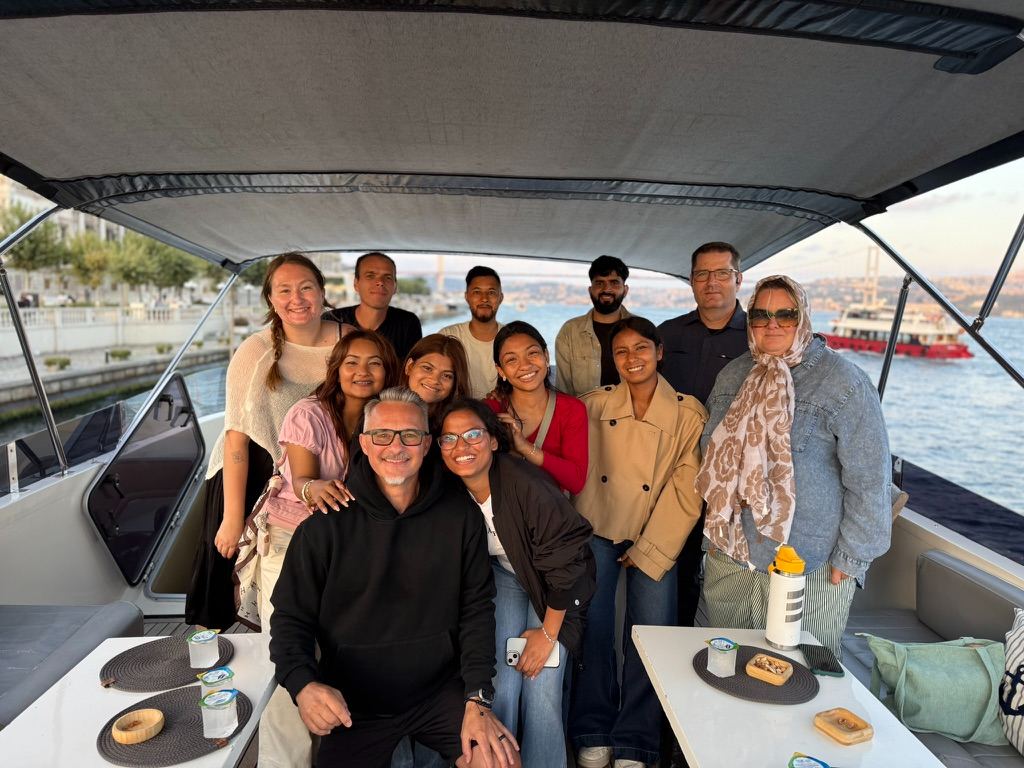
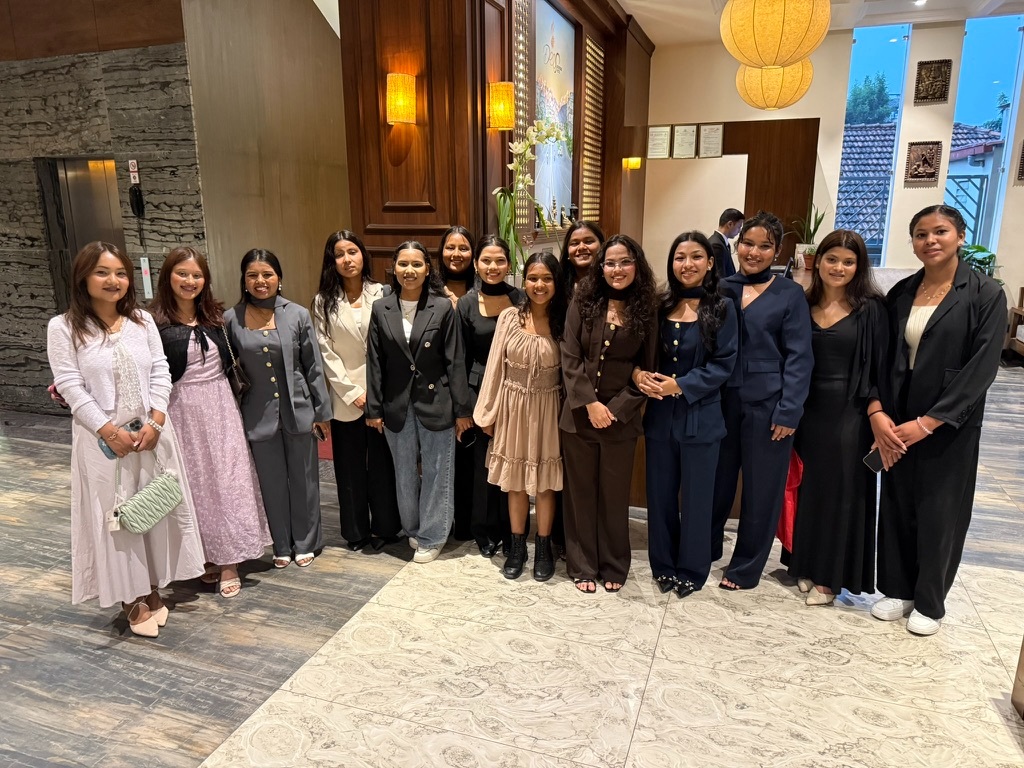
Success in Istanbul: Unlocking the Door to a Bigger World
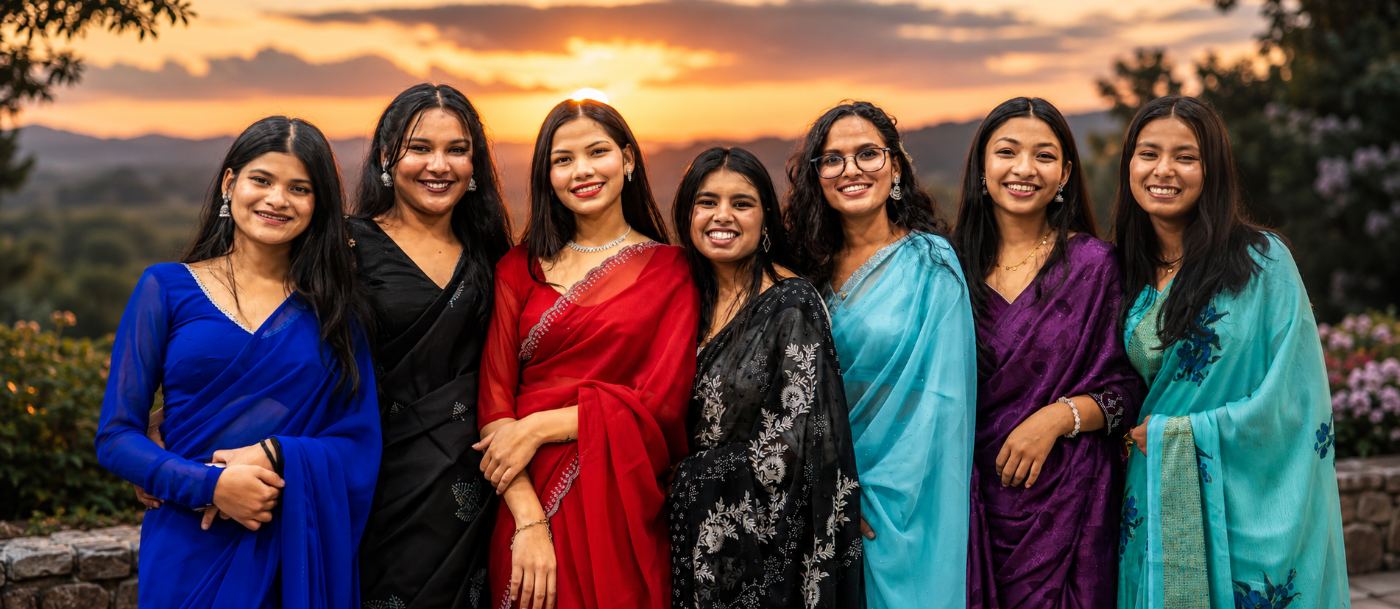
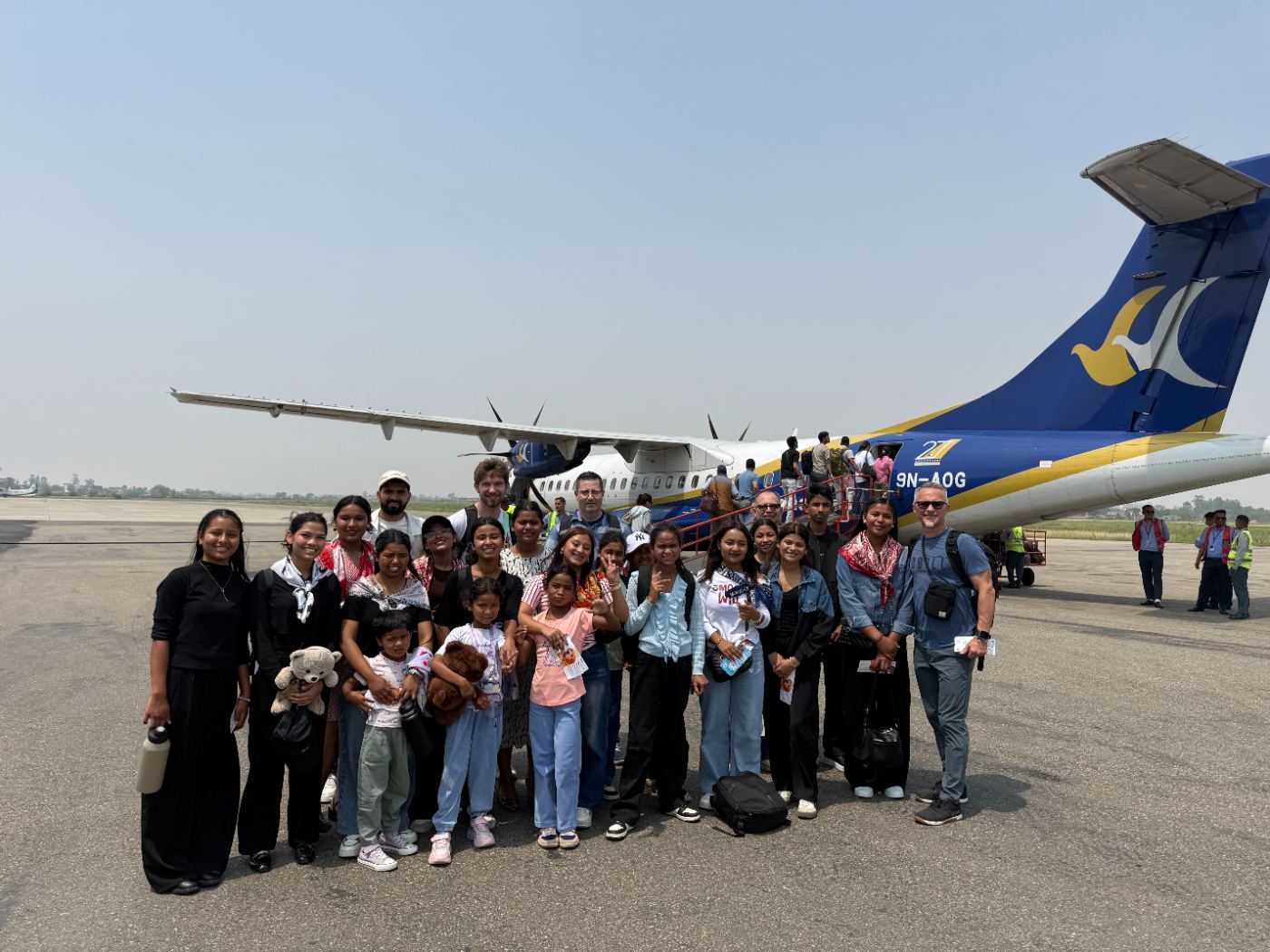
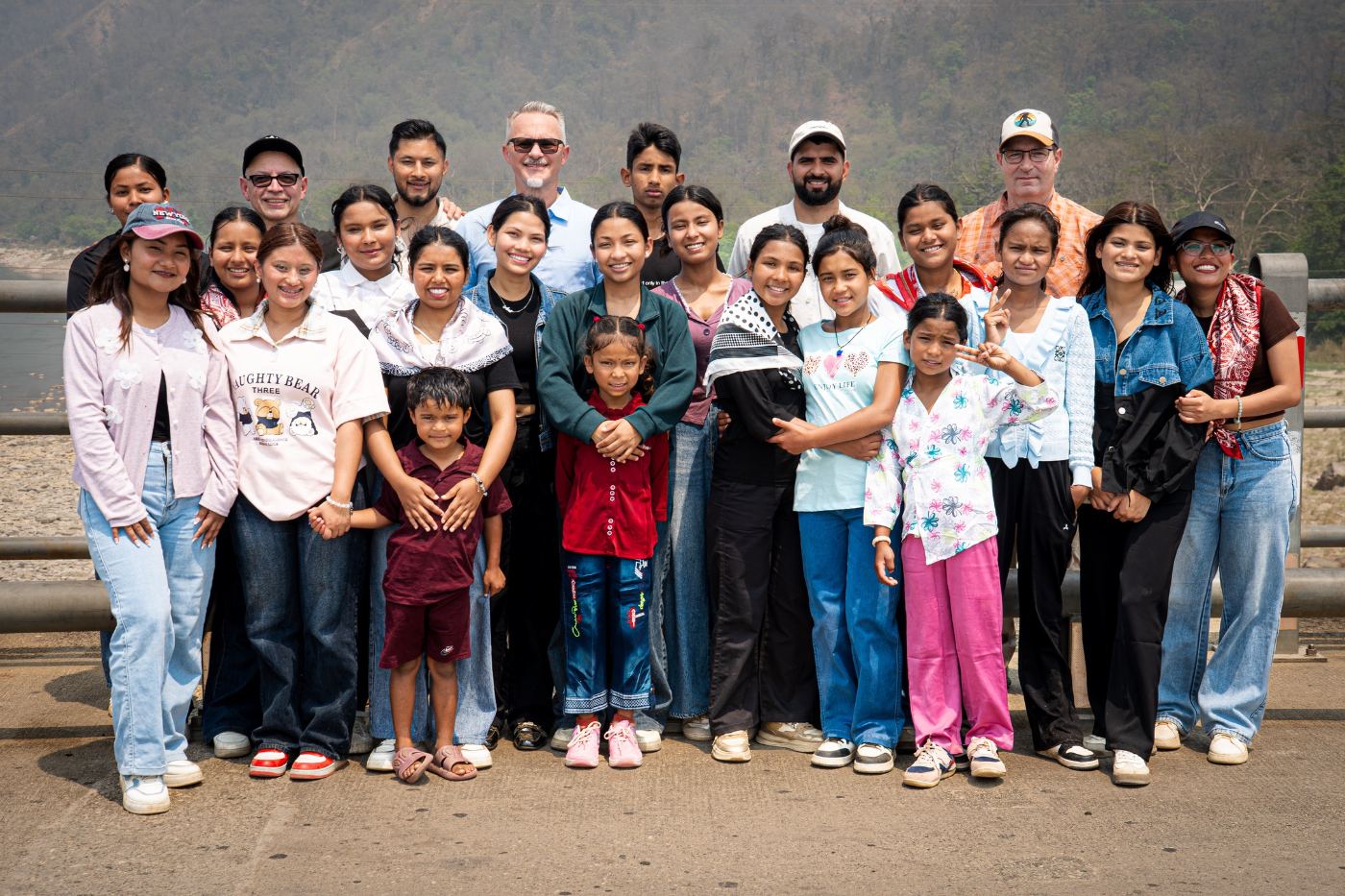
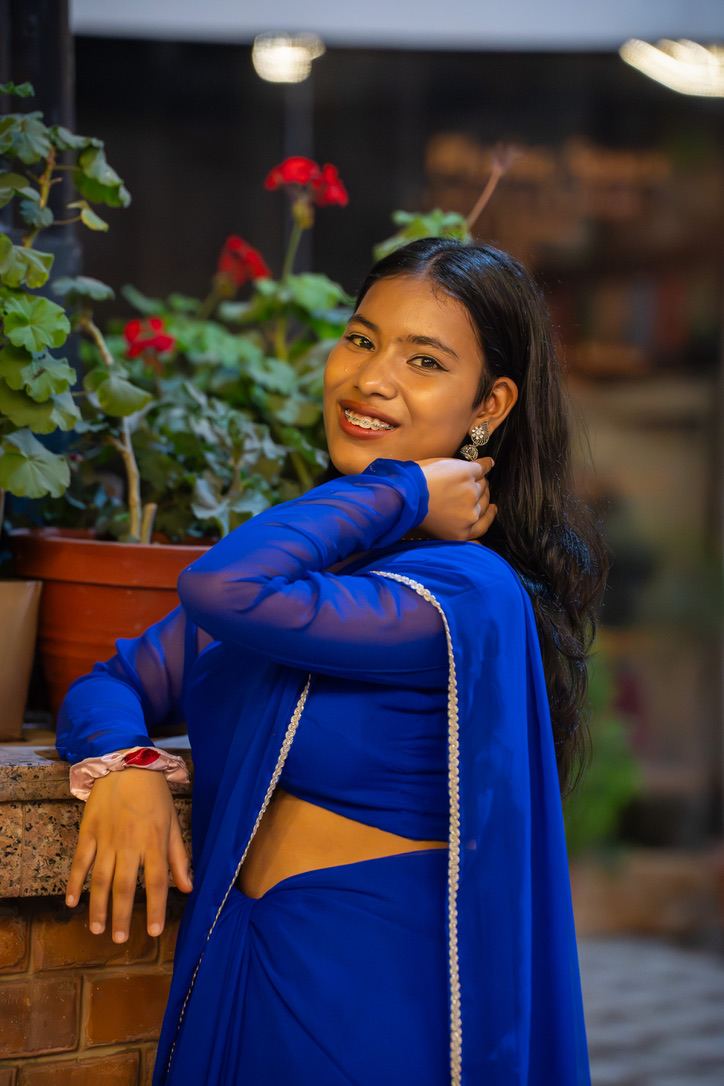
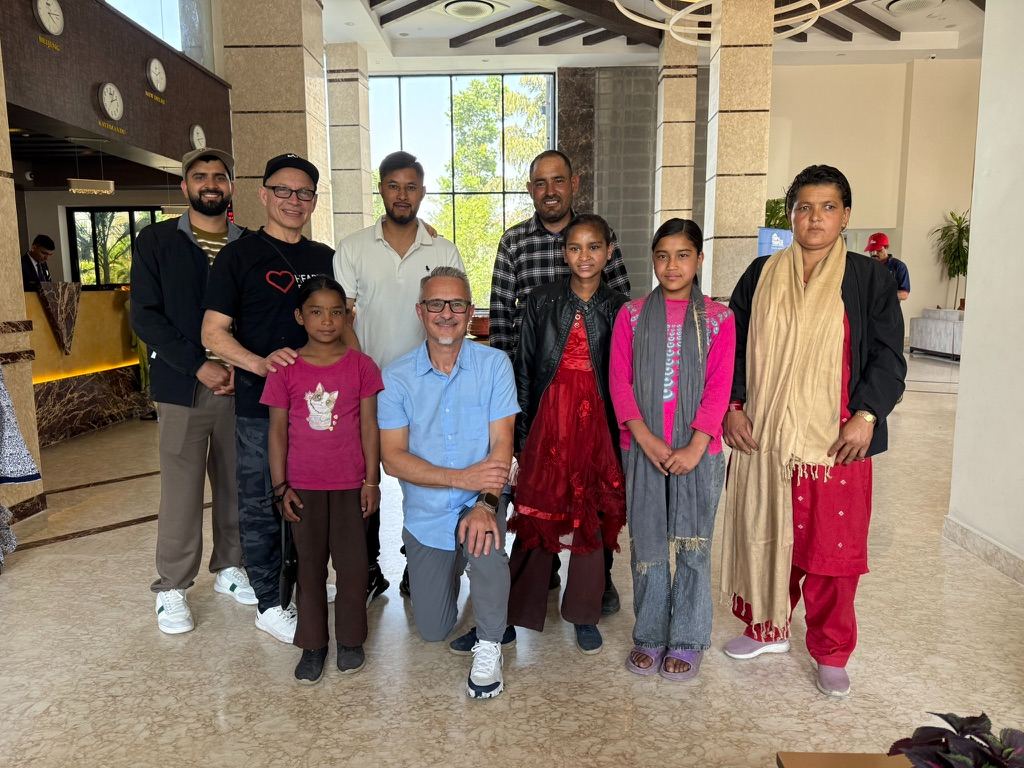
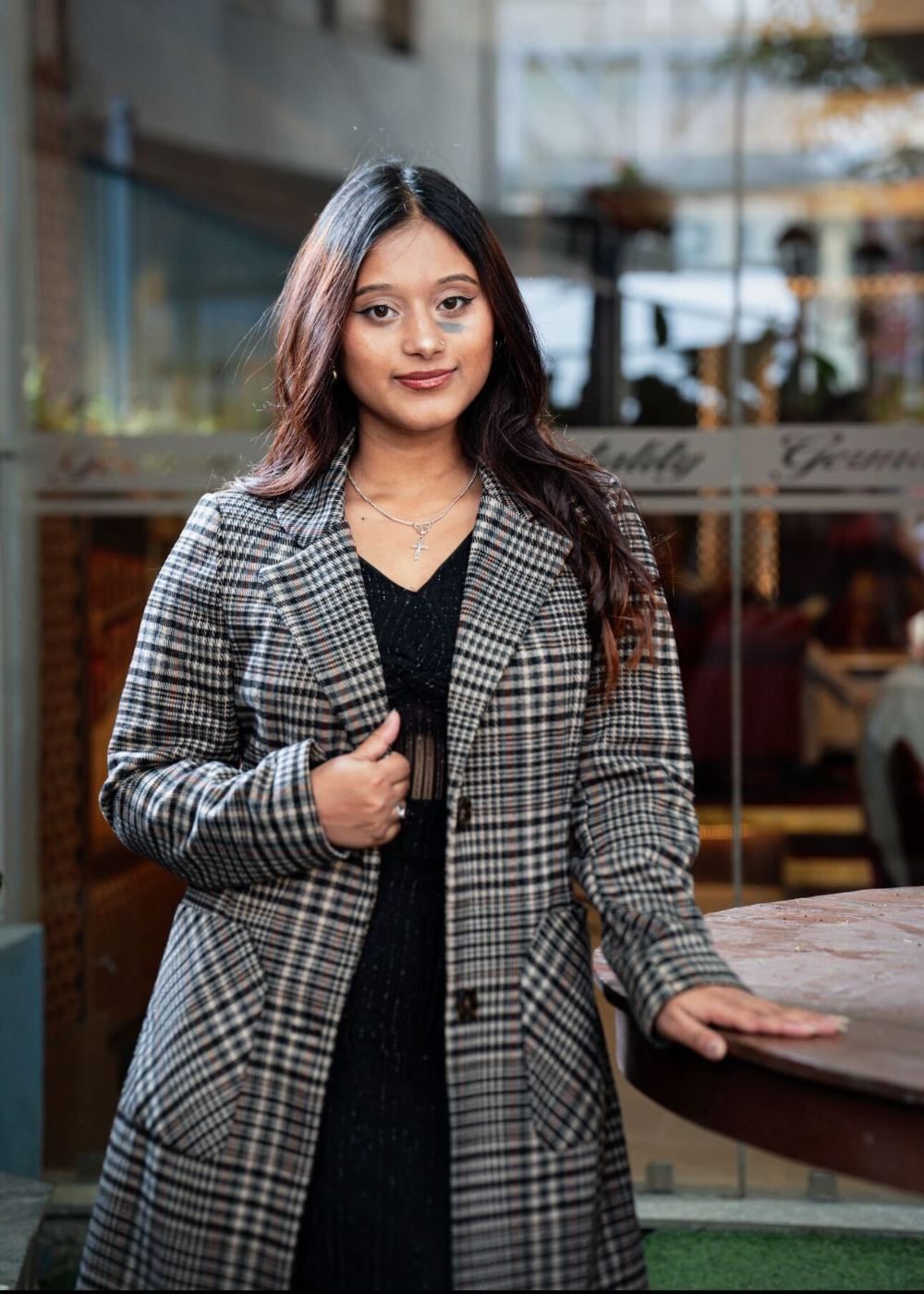
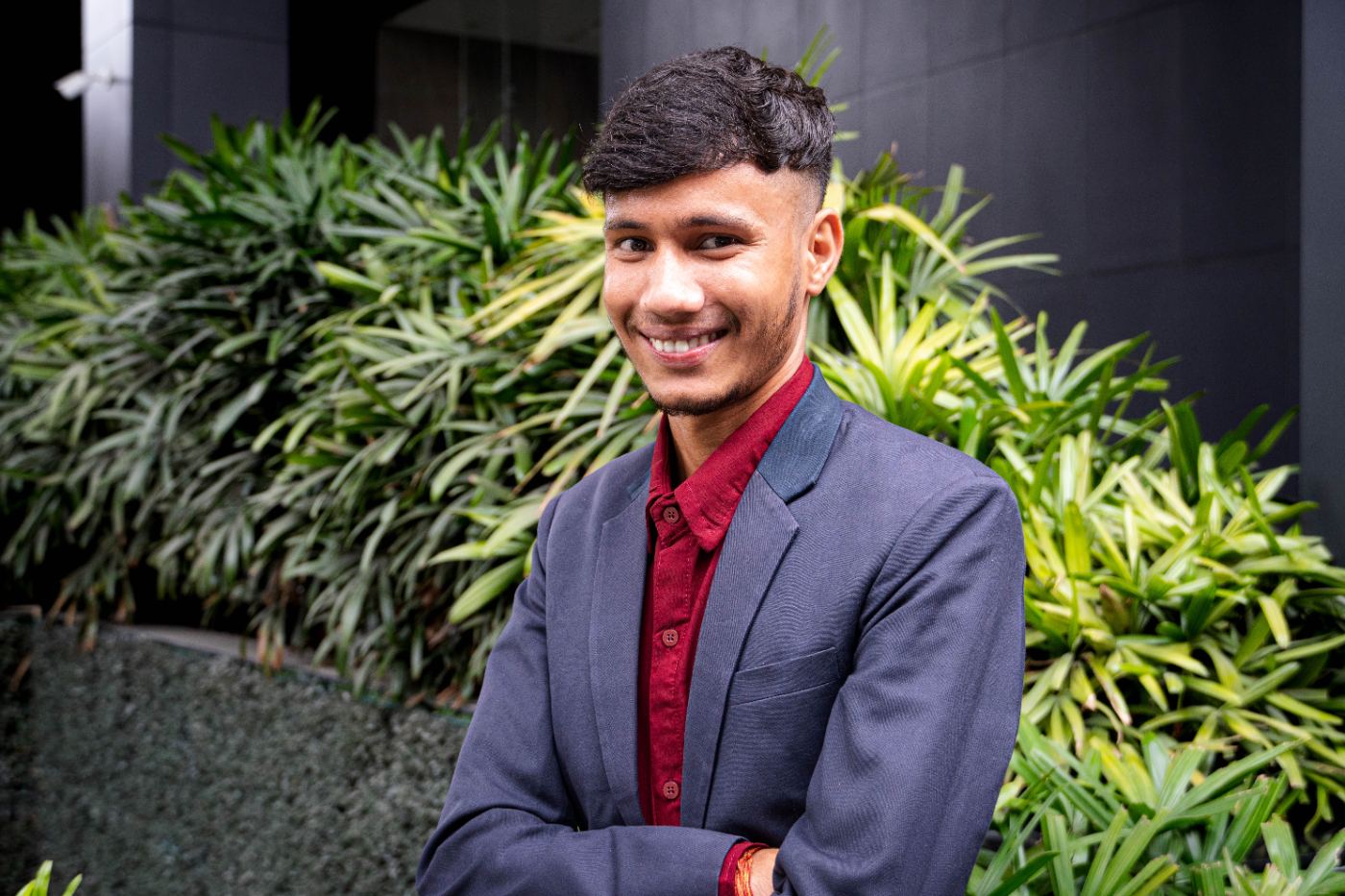
For the first time in our history, girls from our program crossed a border — and came home with a bigger imagination.
We have achieved a monumental marker: unlocking the door for the girls in our program to see a bigger part of the world — and to open their imagination.
It is hard to imagine something you have never seen, and harder still to believe for it. That is exactly why this trip mattered. Every girl in our care was born behind what we call the Lock of Nepal — the invisible barriers that tell a vulnerable girl how small her world must be. This August, that lock opened.
A Monumental Step for Our NGO
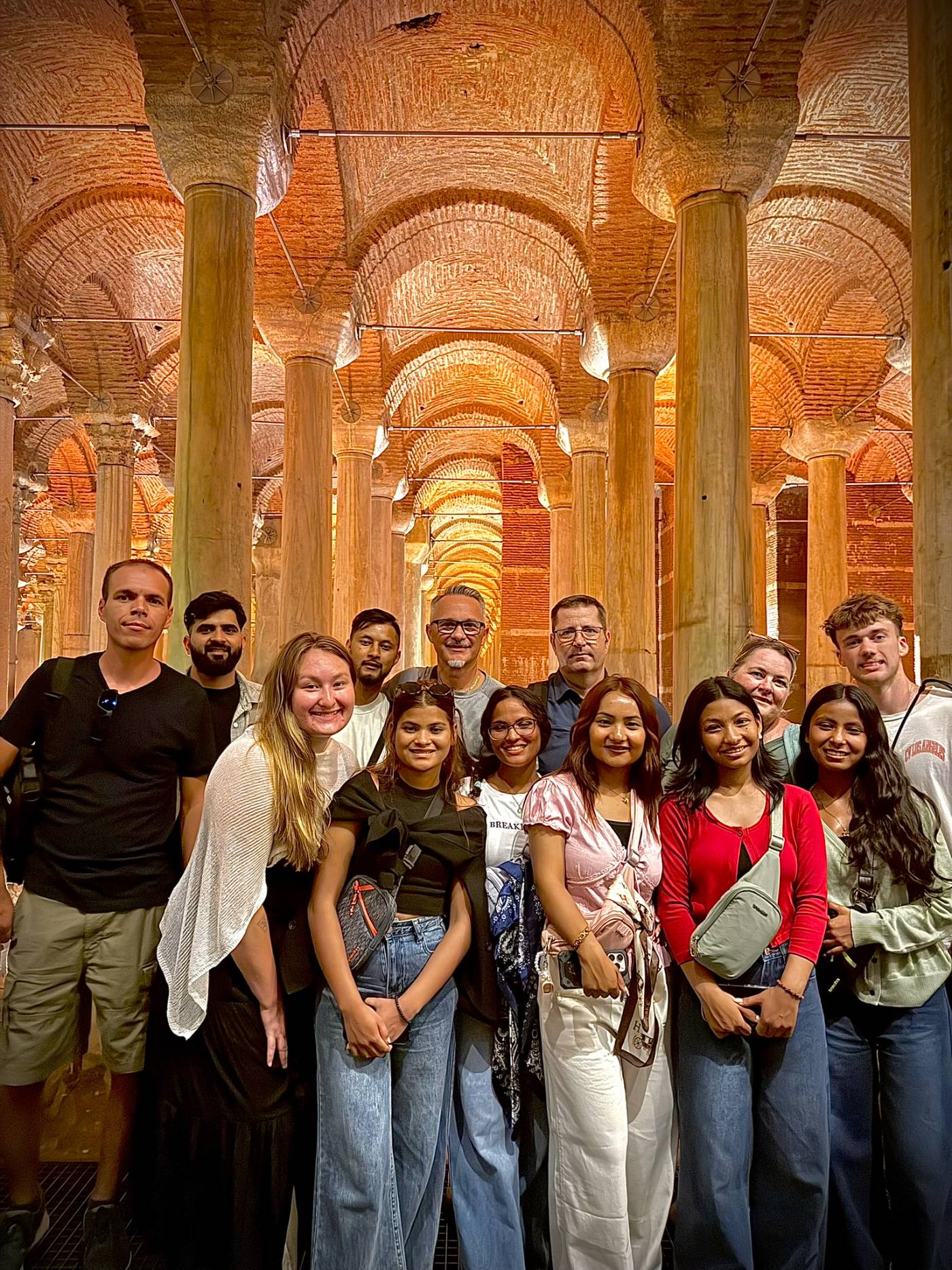
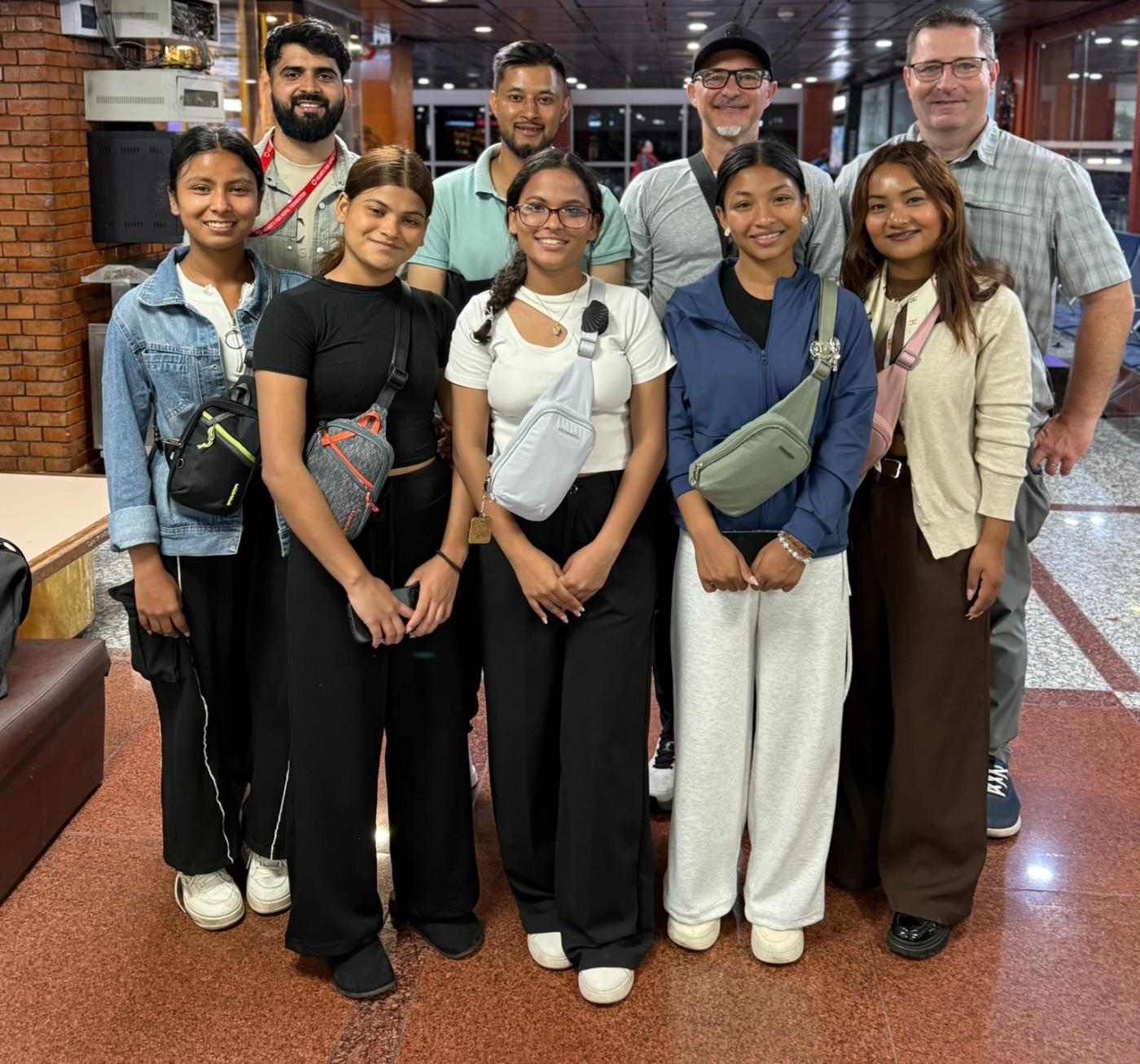
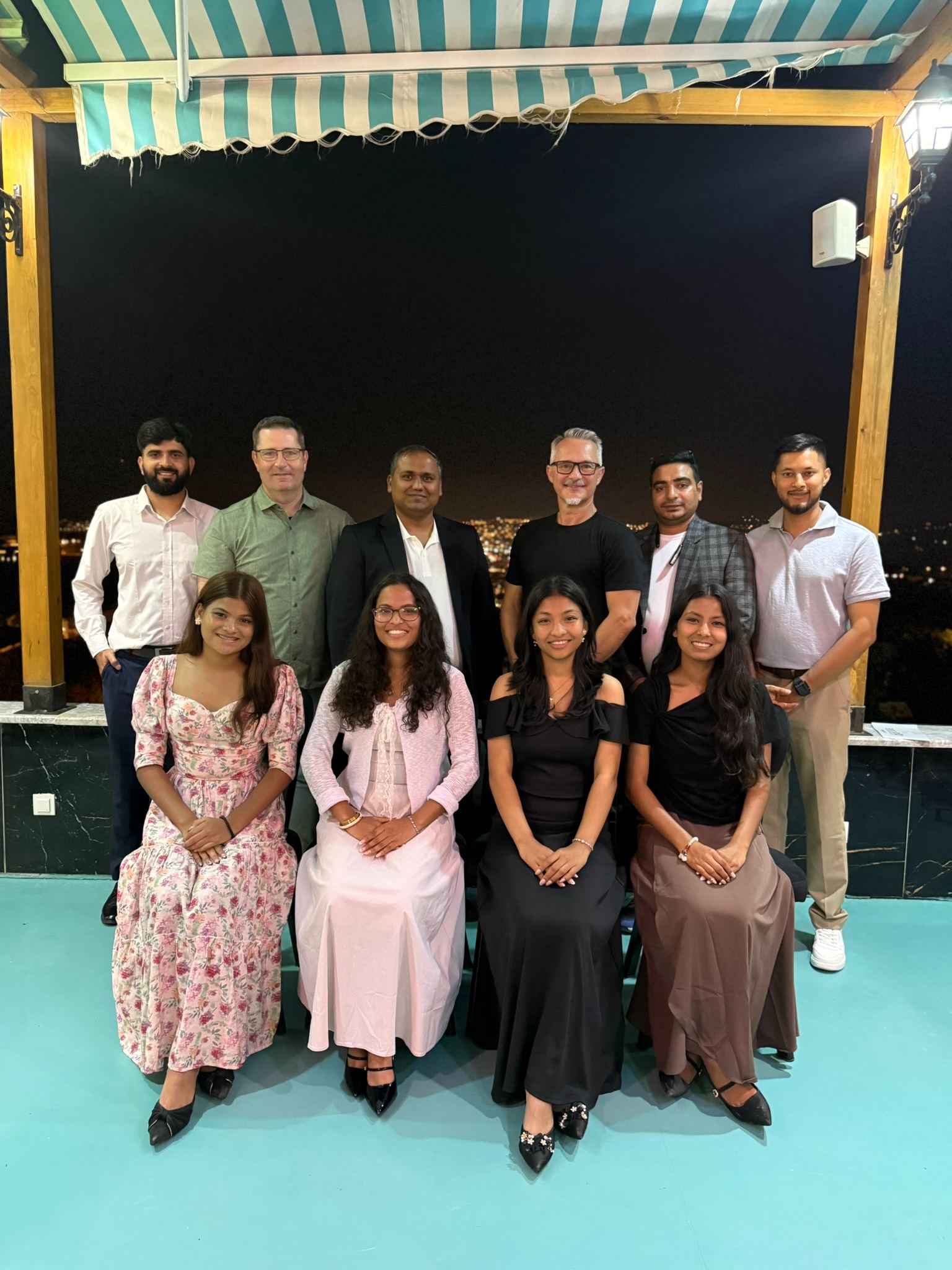
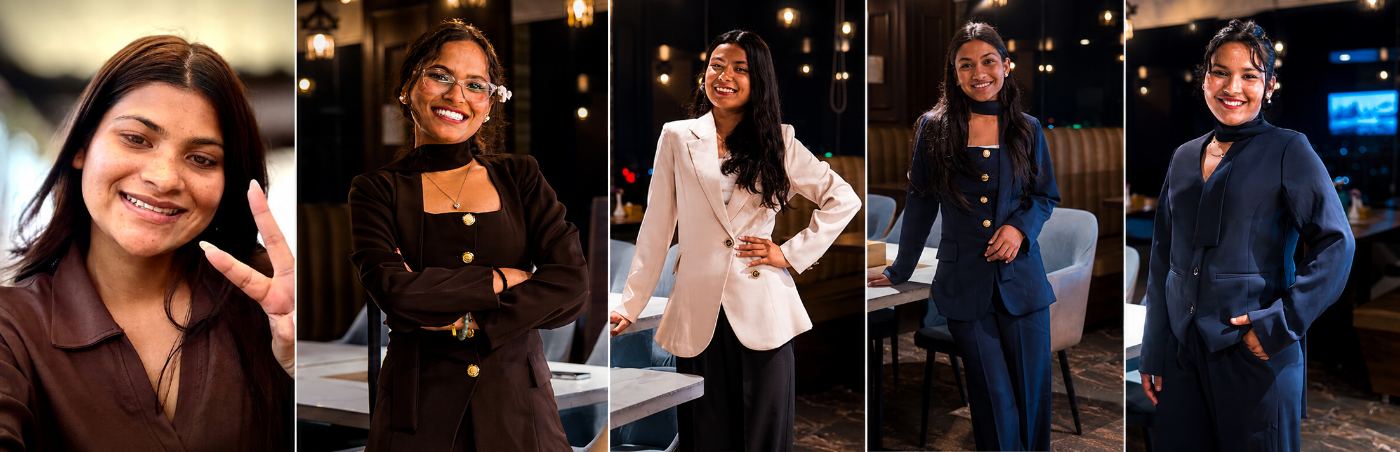
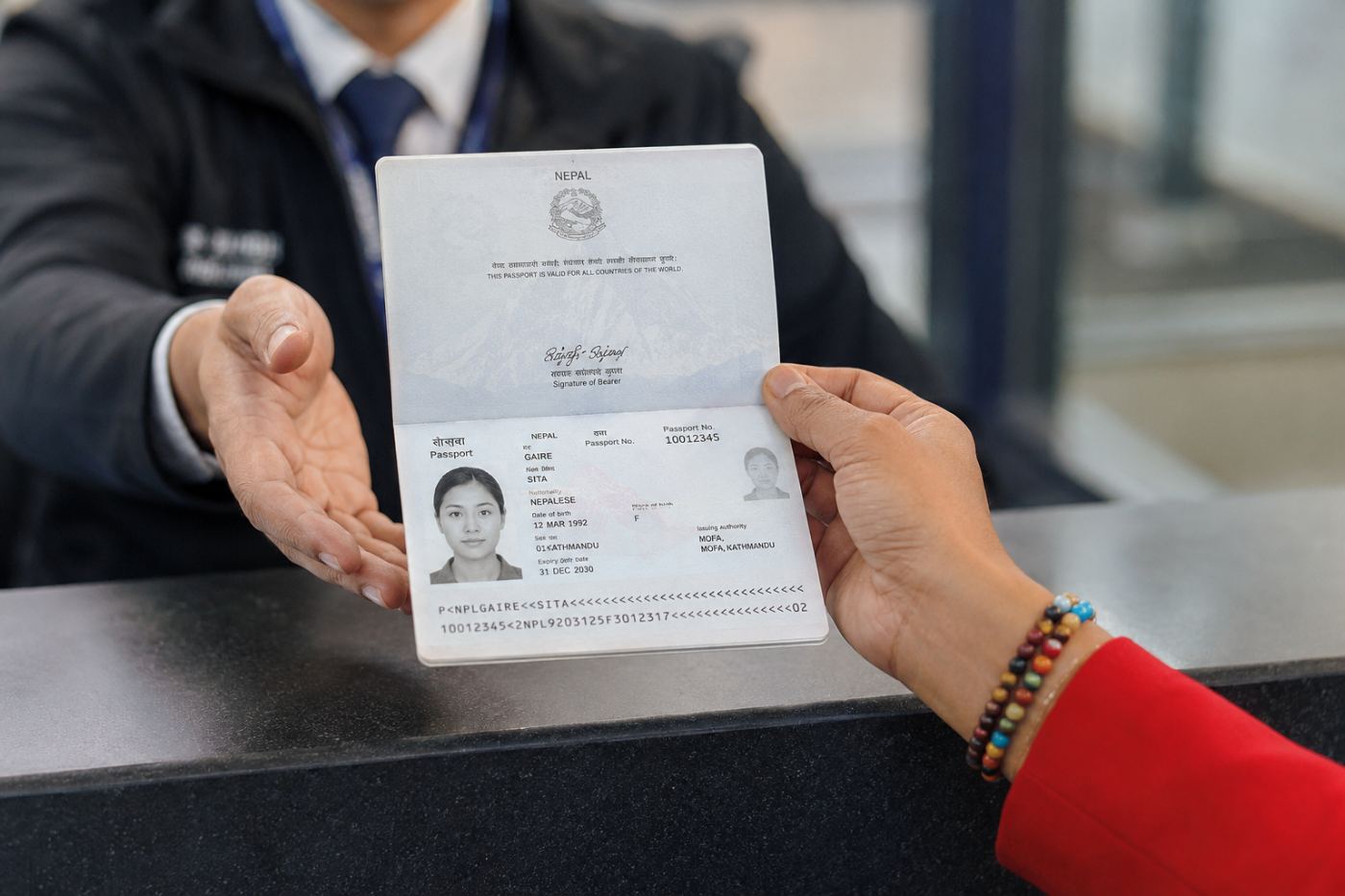
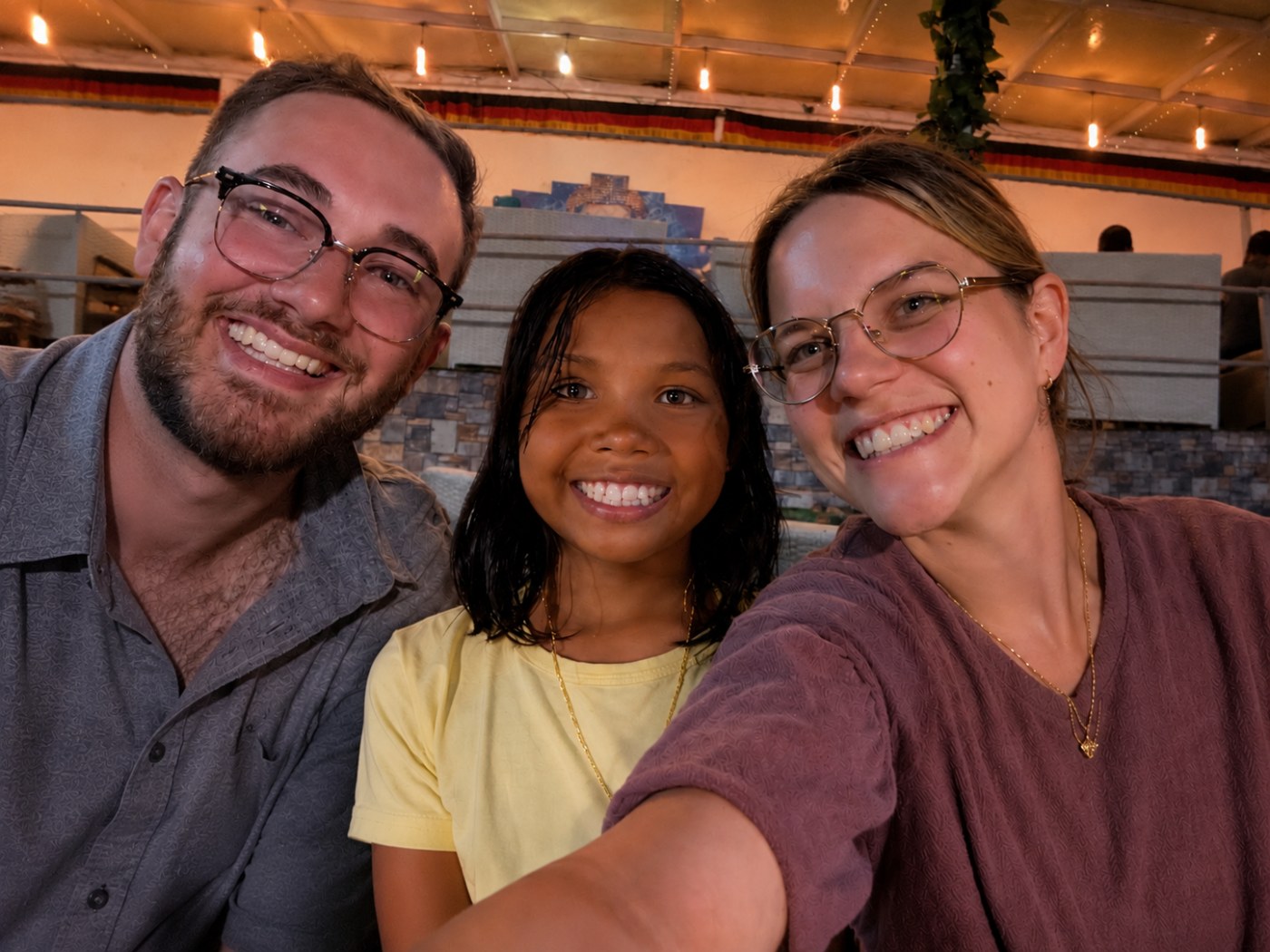
This trip was monumental for our NGO and for our credibility as an organization: gaining visas for our girls and traveling with them to another nation. Istanbul was the right first stop — one of the oldest cities in the world, home to some of the greatest culture on earth, and a living lesson in how wide the opportunities before them truly are.
Paving a Way Forward
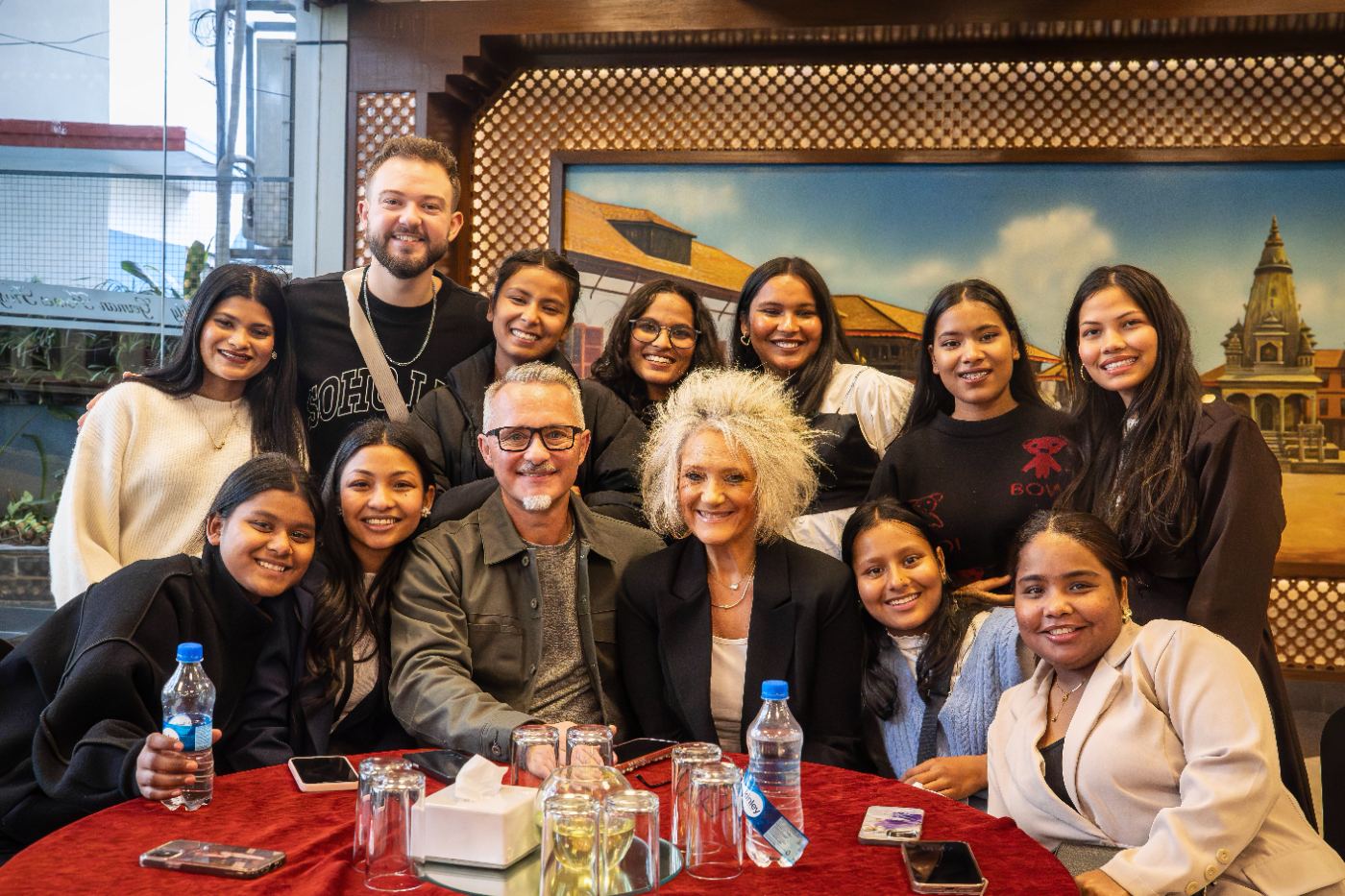
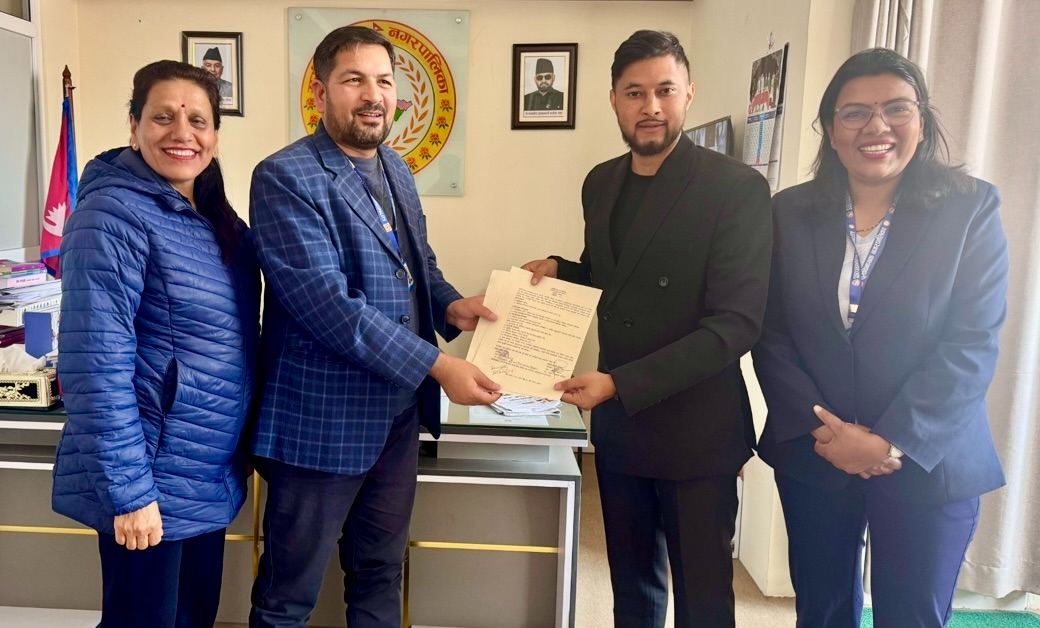
We held an incredible expo for our NGO in Istanbul, where we met the president of the Non-Resident Nepali association of Istanbul, Turkey. That meeting opened a real path forward for our girls — new opportunities to gain education and new career paths for their future.
Broadening their horizons is not a luxury. It is how a girl learns to believe that the world is bigger than the one she was born into — and that it belongs to her, too.
Thank You
We could not have done this without our supporters, our Legacy Partners, and the donors who believe in what we are doing. You did not just send a team to Istanbul — you showed four daughters of Nepal that the door is open.
Leadership Conference 2026 — and the launch of Built or Broken
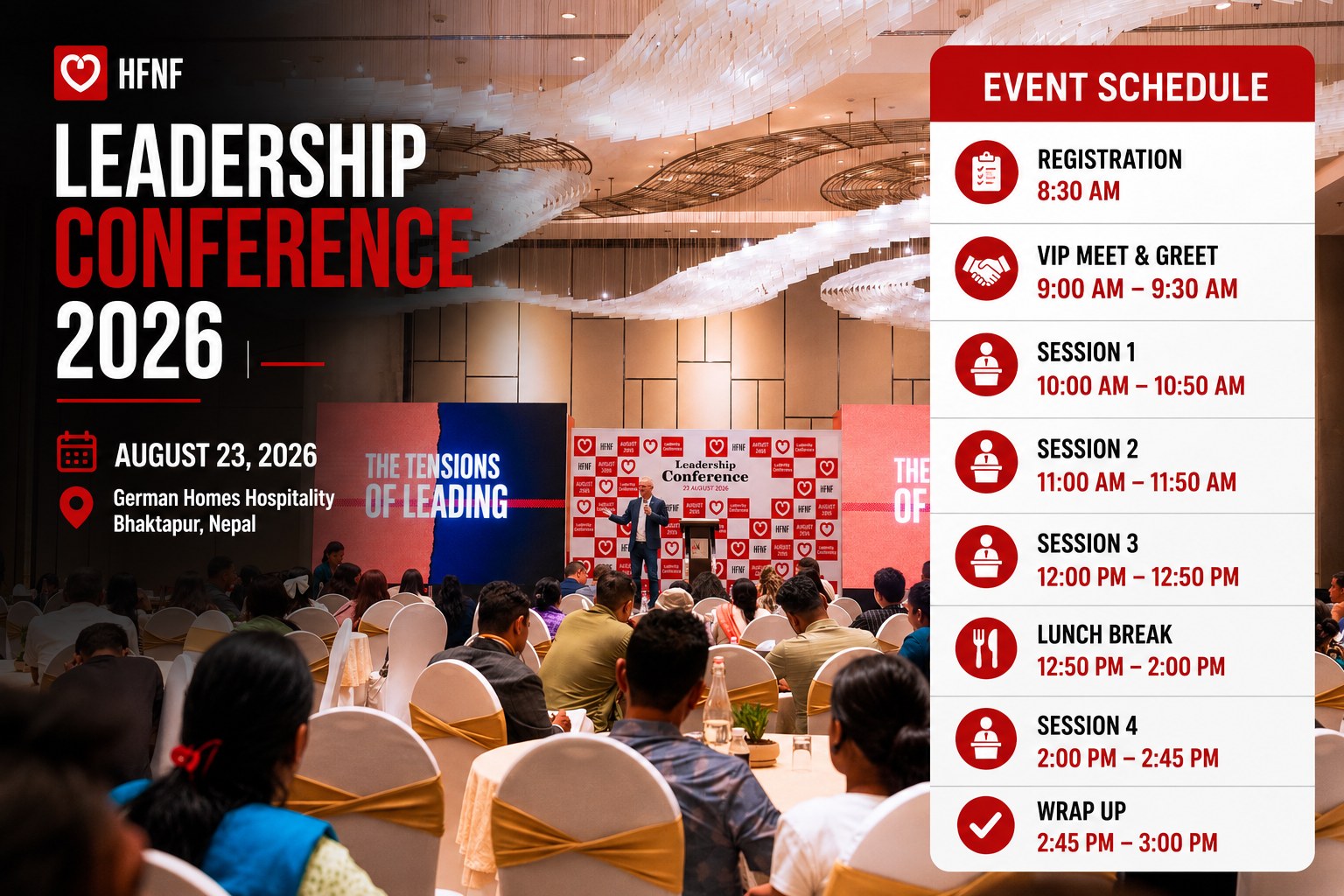
Bhaktapur, Nepal — On Sunday, August 23, the Hearts for Nepal Leadership Conference 2026 filled German Homes in Bhaktapur with a record attendance of more than 500 leaders — the largest gathering in the conference's history.
From 8:30 in the morning until 4:00 in the afternoon, the room held a remarkable cross-section of Nepal's present and future: business leaders, education leaders, government leaders, entrepreneurs, and representatives from across the social sector — all in one place, for one purpose: to grow in their capacity to lead.
A Full Day of Leadership
The day was built around four sessions — three addressing specific areas of leadership growth, and one on artificial intelligence and today's innovations, equipping Nepali leaders to understand and harness the technologies reshaping how we work, decide, and lead.
Throughout the day, attendees engaged in training and discussion on leadership development, decision-making, discipline, accountability, and institutional development — practical teaching designed to be put to work the very next morning.
The Launch of Built or Broken
The centerpiece of the day was the official launch of Built or Broken, the newest book from author and leadership trainer Dennis J. Cummins — unveiled by the author himself on the conference stage.
Built or Broken speaks directly into many of the issues Nepal is facing today. Its central message: leadership does not begin after chaos ends — it begins in the middle of it. Every leader faces two choices: to build with discipline, or to be broken by disorder. The book lays out the systems, structures, and personal discipline required to create clarity, set right priorities, and build a legacy that outlasts the leader.
At a midday press conference, Cummins told gathered journalists that leadership can carry an institution, a society, or a nation toward development — or, when it fails, toward weakness and breakdown. Leadership, he emphasized, is not about position, influence, or popularity; it is about responsibility, discipline, sound decision-making, and accountability.
Echoed Across Nepal
Media outlets from across Nepal covered the conference and the book launch, and their coverage echoed the same conviction: this message matters for Nepal, right now. Reporters highlighted the book's call for young Nepalis to develop a deeper understanding of leadership, and its challenge to leaders to regularly assess the impact of their actions on their institutions, their communities, and their society.
In the news: doleshwornews.com · janaaawajnews.com
One Life at a Time
The Leadership Conference is one expression of a much larger mission. Hearts for Nepal exists to rescue, protect, educate, and empower vulnerable girls in Nepal — transforming the nation of Nepal, one life at a time. Developing Nepal's leaders and developing Nepal's daughters are not two different works. They are the same work: a nation is built the same way a life is — with truth, discipline, and people who refuse to let chaos have the last word.
To more than 500 leaders who came, to German Homes for hosting an extraordinary day, and to every partner who makes this work possible — thank you. This is only the beginning.
The Bhote Koshi Disaster: What Happened, What We Know Now, and How We Are Responding
A technical account of the August 26, 2026 glacier collapse and flood — and how Hearts for Nepal is responding inside Nepal's child protection framework.
Last updated August 30, 2026. Figures are drawn from Nepal's NDRRMA, Nepal Police, the Nepal Electricity Authority, UNICEF, the Nepal Red Cross, and ICIMOD. Casualty counts have risen substantially every day since the disaster and will continue to change.
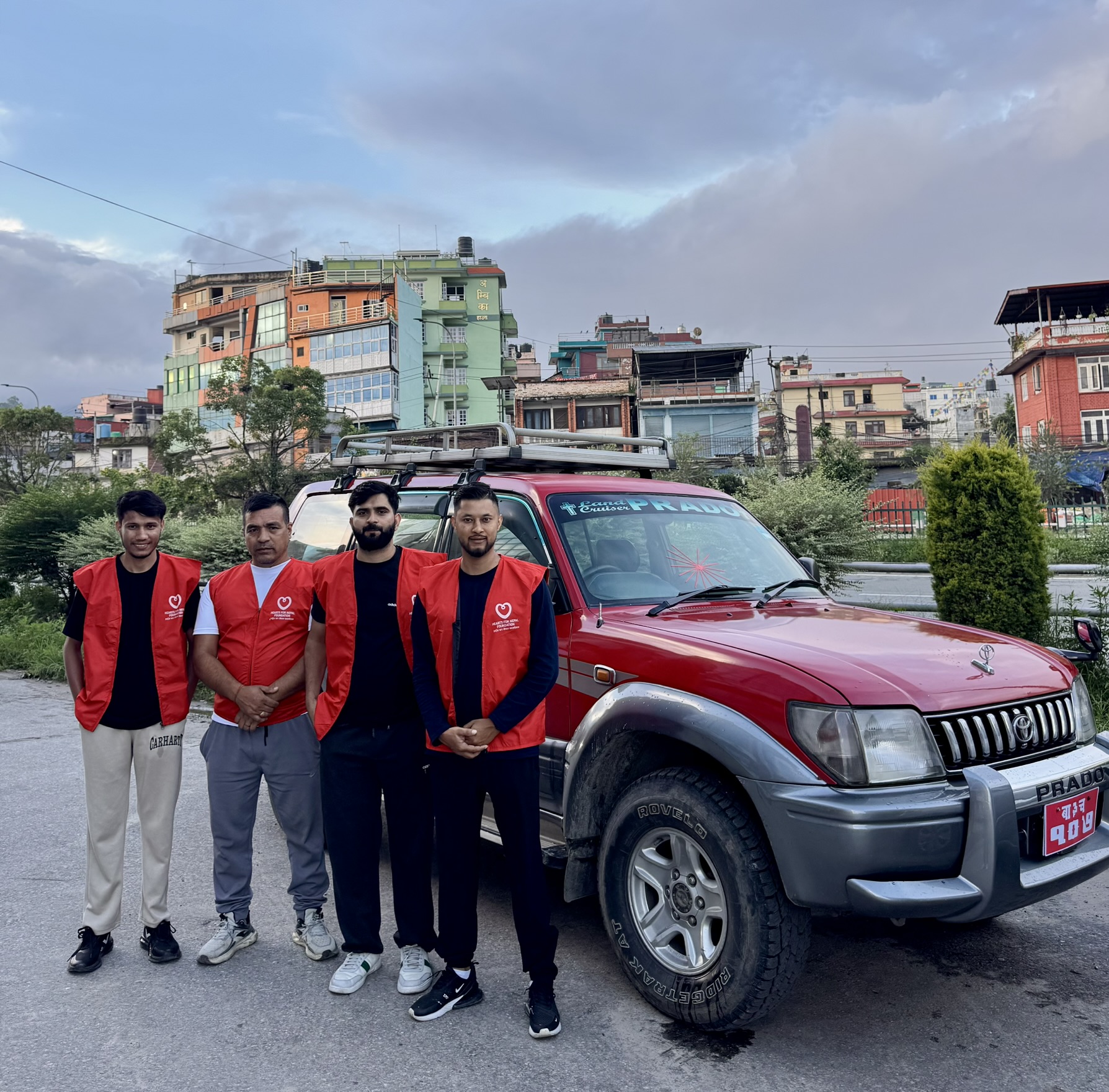
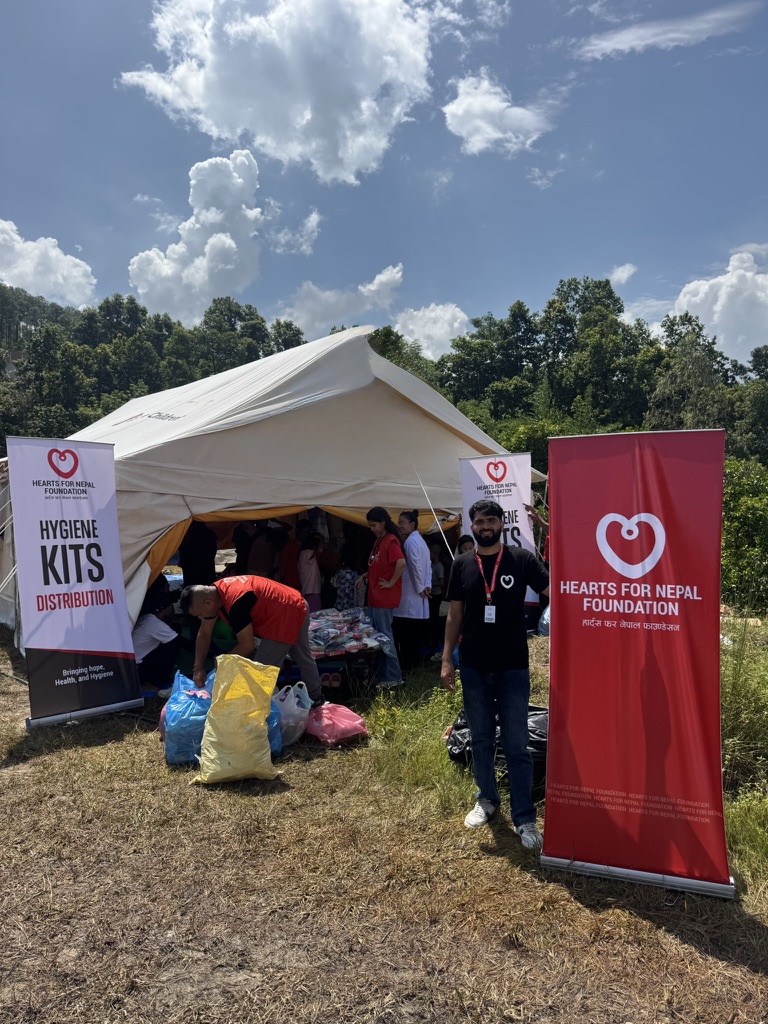
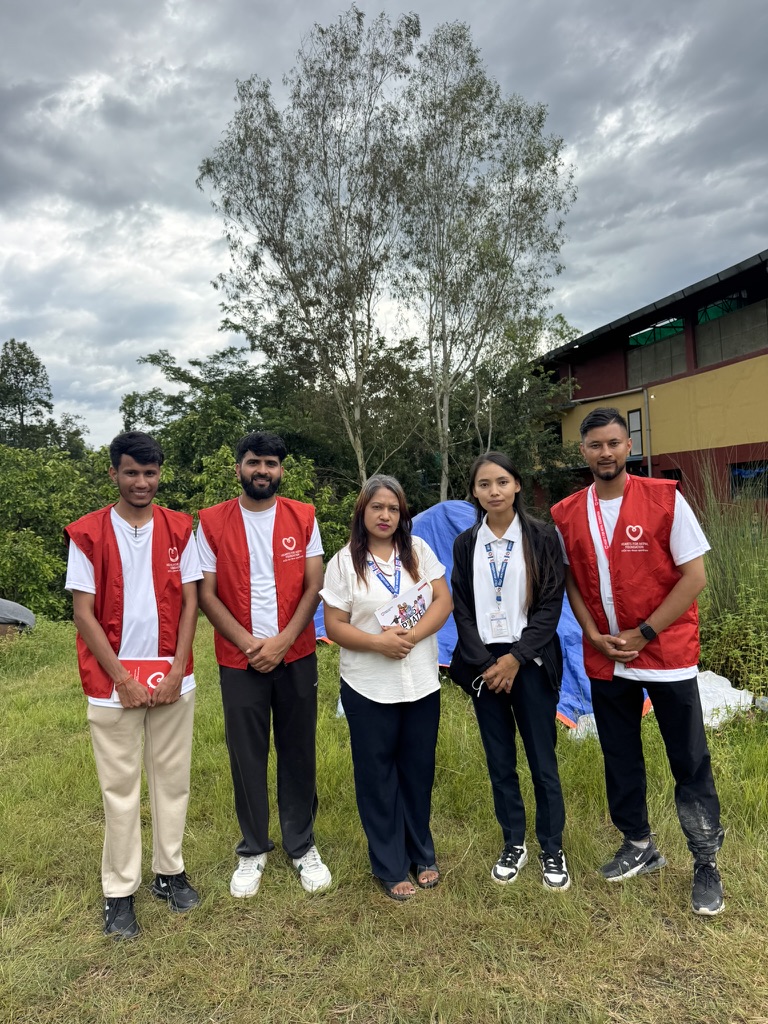
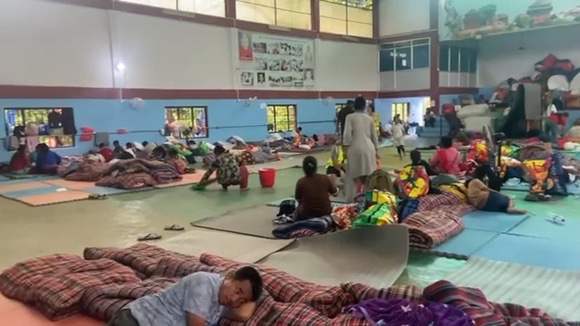
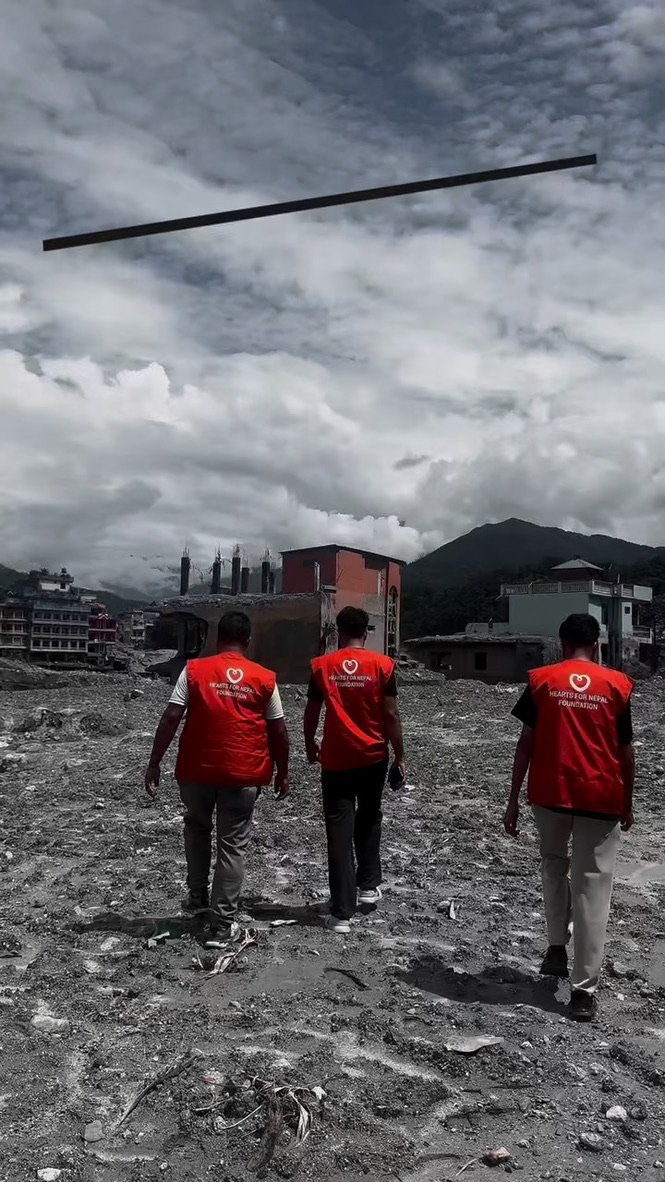
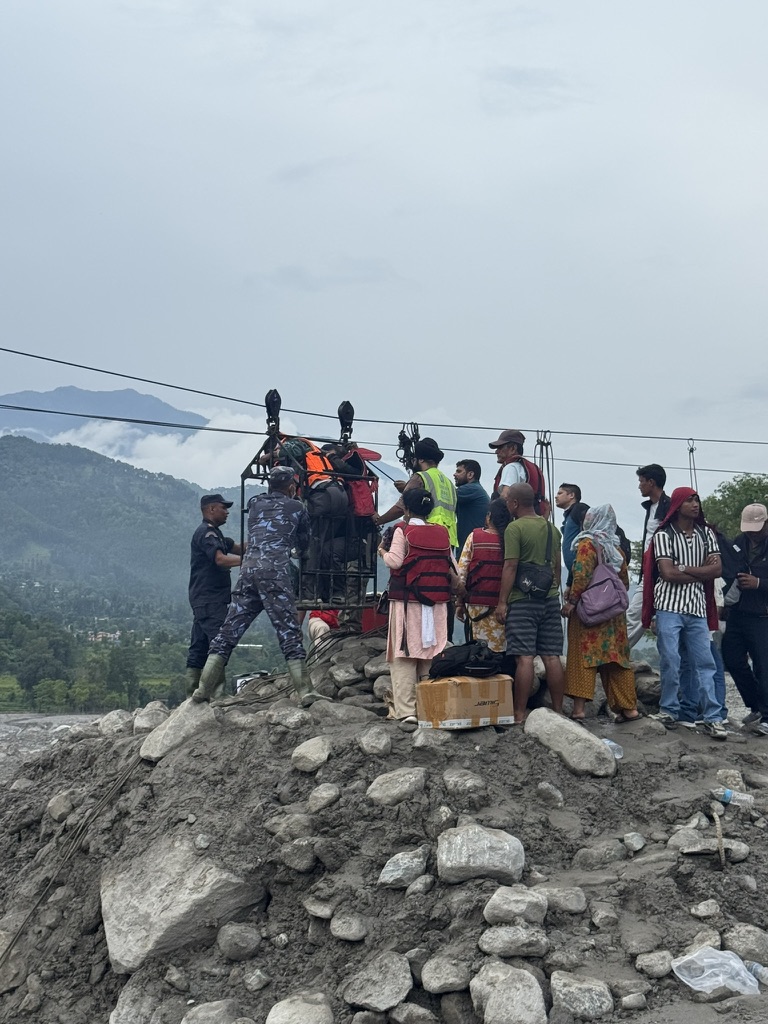
Our Nepali relief team, before leaving for the flood-affected districts.Hygiene kit distribution, run through our Nepali staff and the local ward office.Coordinating with local officials on site, as the protection framework requires.Displaced families sheltering in a community hall.Walking the ground the flood passed through, assessing what is needed.Our team going acrossed to deliver much needed supplies
The Collapse
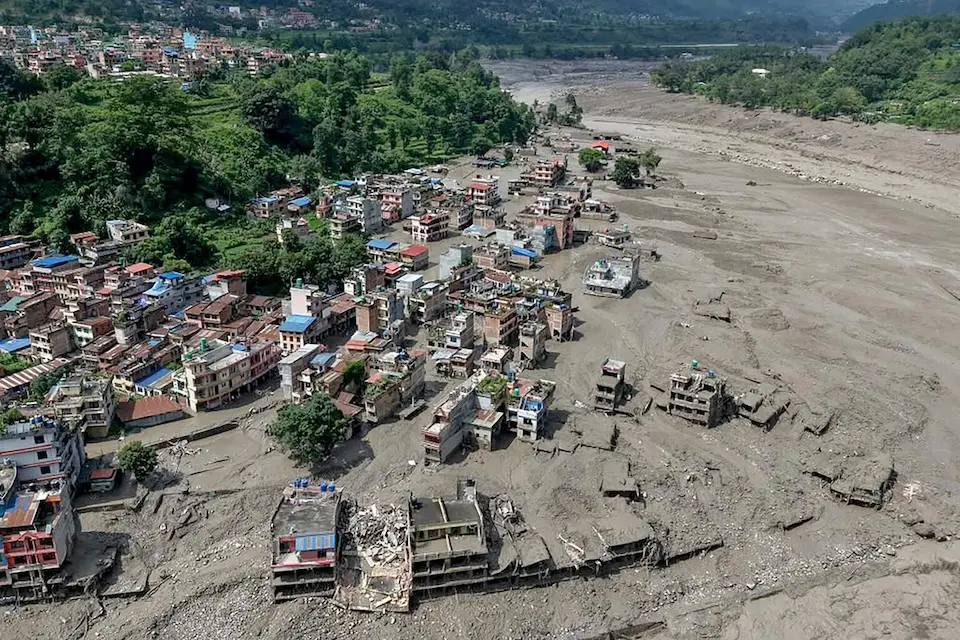
At high elevation on the Tibetan side of the Himalaya, a section of glacier estimated at roughly 2,000 feet wide broke away from its parent mass.
Satellite imagery reviewed by earth scientists indicates the lower portion of the glacier detached at approximately 5,200 metres — around 17,000 feet — and fell some 1,200 metres to the valley floor below. This was not ice alone. Researchers analyzing seismic data estimate that hundreds of millions of tons of material, including a significant volume of rock and sediment, came down with it.
There had been no heavy rainfall. This is the single most important technical detail of the event, and it is what separates this disaster from the monsoon flooding Nepal prepares for every year. Nothing in the weather gave warning.
The Dam That Formed, Then Failed
The ice-and-rock avalanche entered the Lhende Khola, a small tributary of the Bhote Koshi River, and blocked it.
Nepal's Department of Hydrology and Meteorology reports that preliminary satellite imagery placed the debris blockage approximately 20 kilometres upstream of the Miteri Bridge at the Nepal-China border. Behind that blockage, water accumulated against a wall of ice, rock and sediment.
The blockage held. Then it did not.
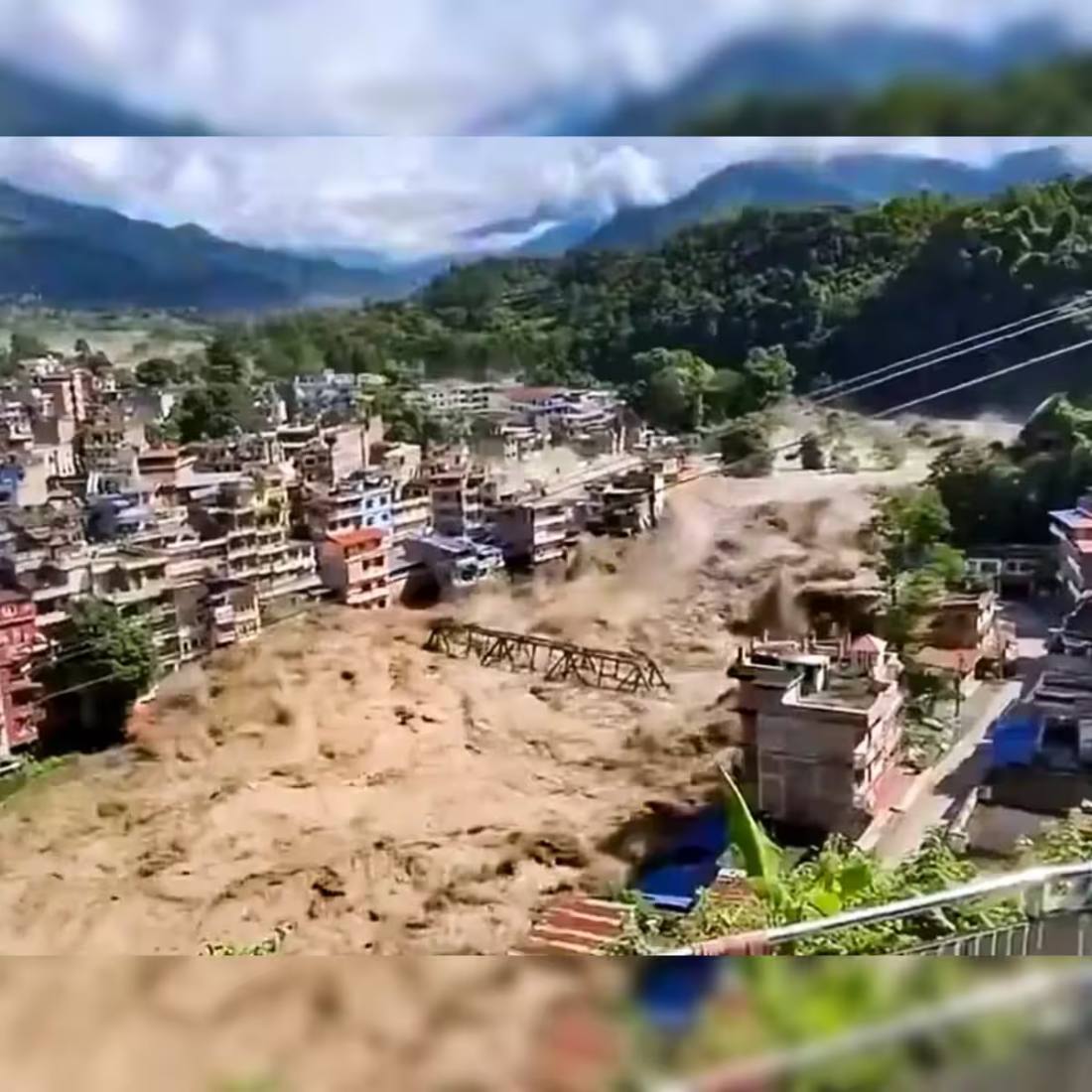
What was released downstream was not a river rising. It was a sudden, catastrophic discharge of impounded water carrying the full debris load of the avalanche that created it. Water levels in the Trishuli rose by as much as nine metres — thirty feet — in thirty minutes.
The surge crossed into Nepal at approximately 8:40 a.m. local time on Wednesday, August 26.
What the Water Took
The border settlements took the first and worst of it.
Timure, a village roughly three kilometres from the Rasuwa border checkpoint, was struck directly. Satellite images from August 14 compared against August 26 show a swollen, redirected river where the settlement stood, with structures on both banks heavily damaged or washed away entirely. The village helipad was swept off — a rescue helicopter dispatched to evacuate stranded residents was forced to return to Kathmandu because there was no longer anywhere to land.
Syabrubesi and Rasuwagadhi, the border crossing and dry port area, sustained severe damage to markets, vehicles, cargo and infrastructure.
The surge then moved downstream through the Trishuli River corridor, carrying destruction and casualties well beyond the impact zone into Nuwakot, Dhading, Gorkha, Chitwan and Tanahu — districts more than a hundred kilometres from where the glacier fell.
One detail captures the cruelty of this event. A community of 250 households on the low-lying banks of the Trishuli — families who had already been displaced once, by the 2015 Gorkha earthquake, and resettled there — has now been swept away entirely.
The Human Toll
As of August 30, in Nepal:
752
Confirmed dead
2,502
Missing
1,473
Injured
8,100+
Rescued
90,000+
People affected
17,000+
Children affected
Across the border in Tibet, Chinese authorities have confirmed at least 16 additional dead and 546 missing, bringing the regional total to approximately 768 dead and more than 3,000 missing.
Among those unaccounted for in Nepal are 589 foreign nationals, including roughly 90 Americans. More than 930 workers remain missing across the hydropower projects in the flood zone. Nearly 20,000 security personnel have been deployed to the search.
This is Nepal's deadliest disaster since the 2015 Gorkha earthquake. Should a significant portion of the missing be confirmed, it will stand as the deadliest flood event in the country's recorded history.
Children
UNICEF reports that at least 17,000 children have been affected across Rasuwa, Nuwakot and Dhading.
Eighteen schools have been completely destroyed and twenty more damaged. An estimated 10,000 school-age children now need urgent support simply to continue their education — temporary learning spaces, replacement materials, a safe place to sit down and be a child again.
Children have been separated from their families in the chaos. Some have lost parents. Some are injured. Some are being sheltered at army relief centres while attempts are made to reunite them.
UNICEF has warned that child survivors face heightened risk of disease, malnutrition, violence and exploitation. That last word matters, and it leads directly to the next section.
The Power Grid
The Bhote Koshi and Trishuli corridors carry a disproportionate share of Nepal's electricity generation. The water went straight through them.
The Nepal Electricity Authority reports damage to eleven hydropower projects totalling 405 megawatts, plus a 25-megawatt solar installation — 430 megawatts of generation capacity lost or compromised in a single morning. Against a national hydropower fleet of approximately 3.2 gigawatts, that is more than twelve percent of the country's generating capacity.
The 111-megawatt Rasuwagadhi project near the Chinese border sustained the worst of it; its powerhouse and substation have been reported completely destroyed. The consequences will be felt in load-shedding, lost industrial output and national revenue for years.
Why This One Is Different
Nepal knows disaster. It plans for monsoon flooding. It has rebuilt from earthquakes. Its people are among the most resilient on earth.
This event defeated the planning for three reasons:
No rain. Every existing flood-warning framework in the corridor keys on precipitation. There was none. The trigger was glacial instability, and it gave no meteorological signal.
It began in another country. The collapse occurred inside Tibet. Nepal's warning infrastructure cannot see across that border in real time.
It has happened before, and recently. On July 8, 2025, a previously unmonitored supraglacial lake burst approximately 35 kilometres upstream of Rasuwagadhi. It killed nine people and swept away the Nepal-China Friendship Bridge. The same corridor. The same river. A fraction of the scale.
The underlying driver is not in dispute. The United Nations reported in 2023 that Nepal's mountains had lost close to one-third of their ice in just over thirty years, and that Himalayan glaciers melted 65 percent faster in the previous decade than in the one before it. As glaciers retreat, the rock faces they once buttressed destabilize.
Protecting Children in the Aftermath: Nepal's Directive, and Why We Follow It
On August 29, three days after the flood, Nepal's National Child Rights Council issued an urgent nationwide directive concerning children affected by the Bhote Koshi and Trishuli floods.
We are publishing our position on it here, openly, because we believe our supporters deserve to know exactly how a foreign-founded organization conducts itself in a disaster zone.
What the directive says. For children in Rasuwa, Nuwakot, Dhading, Gorkha and Tanahu who have lost parents or guardians, gone missing, or been injured, Nepal's Children's Act 2075 establishes that care must first be arranged within the family — with other family members or relatives on the father's or mother's side — including relief, treatment and psychosocial counselling. Only where the local level genuinely cannot manage that may a case be referred upward to the Council. Only then may an approved and registered institution provide temporary protection.
The directive is explicit: no person and no organization may place a child in institutional care, or transfer or relocate a child, without a local Child Rights Committee decision, a Child Welfare Officer recommendation, and the consent of the National Child Rights Council.
Why this is right. In the weeks after a disaster, children become vulnerable in a way that is easy to miss. Well-meaning people move them. Less well-meaning people move them too. Nepal learned this painfully after the 2015 earthquake, when disaster displacement became a vector for trafficking and for children being placed in institutions while living relatives were still searching for them. That the Council issued this directive within three days is not bureaucracy. It is a government moving faster than the traffickers.
What this means for Hearts for Nepal. We run a residential programme for vulnerable girls, recently evaluated and formally recognized by our local Municipality Office as a model residential facility. That standing does not entitle us to take in a single child from this disaster on our own authority, and we will not.
We will not accept any child brought to our gate without the full authorization chain described above. Not from a relative, not from a neighbour, not from a local official acting informally, and not from a donor who believes they are doing good. Where an unaccompanied child comes to our attention, our staff will make a warm handoff to the local Child Welfare Officer — because the child's living relatives may be searching for them right now, and family reunification, not institutional placement, is both the law and the right outcome.
What We Can Do — and Are Doing
Working within that framework, here is where our seventeen years in Nepal and our registered Nepali NGO actually make a difference:
Material relief through existing local systems. Food, clean water, hygiene supplies and shelter materials, distributed through the ward offices and municipal relationships we have built since 2009. We are not establishing new channels in a crisis. We are using channels that already work.
Supporting family-based care. Nepal's law prioritizes placing children with surviving relatives. Those relatives are frequently poor, and have just lost their homes and livelihoods along with everyone else. Direct support to an aunt or a grandmother so she can afford to take in her sister's children is the single most effective child protection intervention available right now — and it is the one that keeps families together instead of pulling them apart.
Education continuity. Eighteen schools destroyed, twenty damaged, ten thousand children out of a classroom. Education has been our organization's core work for seventeen years. Replacement learning materials, uniforms, fees and support for temporary learning spaces are directly within our competence.
Psychosocial support delivered locally. Through our Nepali staff, in Nepali, by people who will still be there in six months when the news cycle has moved on.
Proper referral, every time. Identifying children at risk and routing them into the government's protection system rather than around it.
Why Local Matters
Days before the collapse, our team was in this region.
Hearts for Nepal has worked in Nepal since 2009. We are not an organization that arrives after a disaster and begins learning the terrain. Our staff is Nepali. Our NGO is registered in Nepal. Our relationships with local officials, municipalities and communities were built over nearly two decades of continuous work — long before this week, and they will be there long after.
That matters right now for three reasons:
Speed. Large international relief organizations must clear internal approvals, secure government authorizations, deploy foreign personnel and establish local partnerships before a dollar reaches a family. That process is measured in weeks. Our team is already in-country and already moving.
Access. Relief in Rasuwa, Nuwakot and Dhading will not be delivered by anyone unfamiliar with the roads, the ward offices, or the people. Our team knows all three.
Accountability. Our Nepali staff answers to our leadership, and we answer to you. There is no intermediary layer between your gift and the ground — and no ambiguity about whose rules we follow. They are Nepal's.
How to Help
Hearts for Nepal is a non-religious United States nonprofit. Our relief work carries no religious condition, requirement or affiliation of any kind. Aid goes to people in need, full stop.
Because of that status, we are able to receive:
Individual donations of any size
Corporate donations, including from publicly traded companies
Employer matching gift funds — if your company matches charitable giving, your donation may be doubled at no additional cost to you
Funds directed to this response will be deployed by our Nepali team for immediate relief in the affected districts, within the protection framework described above.
For corporate giving, matching gift verification, or documentation for your employer's charitable giving programme, contact us directly at Sanjeev@experiencechurch.tv or (253) 377-4021.
Breaking
The Bhote Koshi Disaster: What Happened, What We Know Now, and How We Are Responding
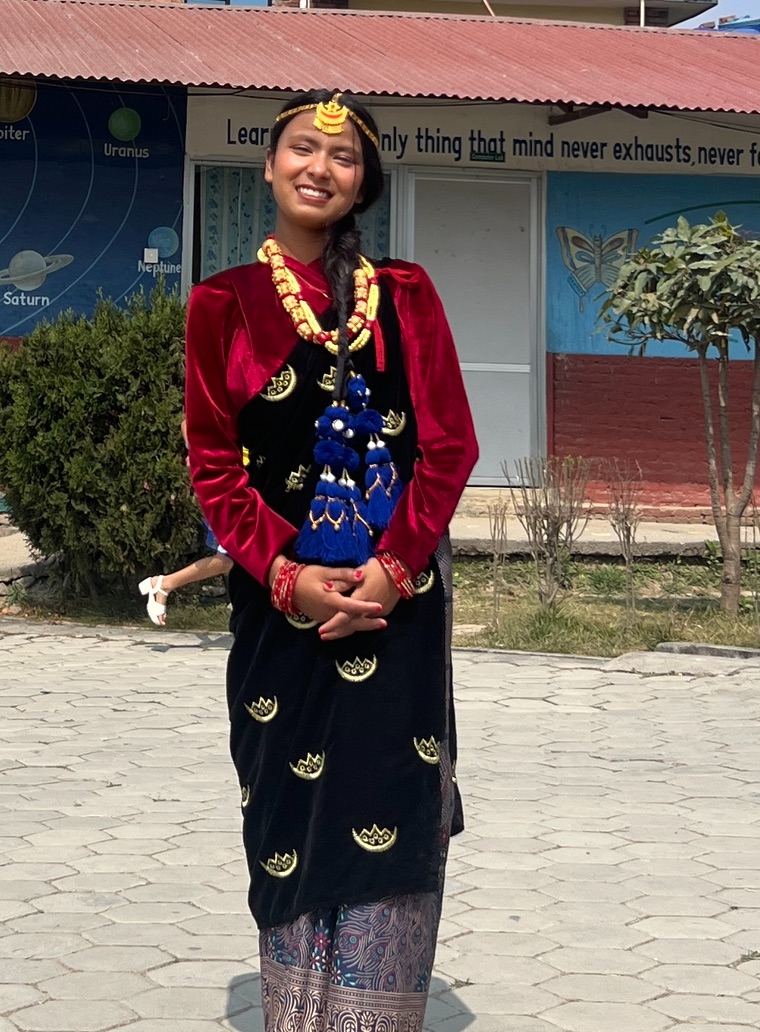
A monumental marker for our NGO: for the first time in our history, girls from our program gained visas, crossed a border, and saw a bigger part of the world — opening their imagination to the opportunities before them.
Read the full story →
Leadership Conference 2026 · Recap
A Record Day in Bhaktapur
More than 500 leaders — the largest gathering in the conference's history — filled German Homes for a full day of leadership training and the launch of Built or Broken, the newest book from Dennis J. Cummins.
Read the full recap →
New story · From the girls’ home
Jersey Day: a first for our girls
For the first time ever, our girls wore jerseys on Jersey Day — a school-wide World Cup celebration. To most people that sounds small. For girls who are so often left on the sidelines, it was anything but.
Read the full story →
Get involved
Protect. Partner. Go.
{{ p.media }}
{{ p.title }}
{{ p.body }}
{{ p.link }} →
Latest · Milestone
The College Home has opened
Older girls now transition to higher education in an age-appropriate home — freeing space in the original hostel to welcome more young girls.
An accessible, open tour of the ministry in the Kathmandu Valley. See the homes, meet the girls — no experience required. Applications close September 1.
For the first time in our history, girls from our program gained visas, crossed a border, and saw a bigger part of the world.
Read the full story →
Leadership Conference 2026 · Recap
A Record Day in Bhaktapur
More than 500 leaders filled German Homes for a full day of leadership training and the launch of Built or Broken.
Read the full recap →
Disaster Relief
The Bhote Koshi Disaster
What happened, what we know now, and how we are responding — inside Nepal's child protection framework.
Read the full report →
New story · From the girls’ home
Jersey Day: a first for our girls
For the first time ever, our girls wore jerseys on Jersey Day — a school-wide World Cup celebration.
Read the full story →
Who we are
Unlocking the Door of Nepal
Hearts for Nepal is so much more than an organization that helps girls get an education and a balanced diet. Those things matter — and we do them well — but they were never the finish line. From the beginning, our commitment has been to help our girls grow beyond what the potential of Nepal sees in them.
The Lock of Nepal
In Nepal, a vulnerable girl faces more than poverty. She faces a caste system and systemic boundaries that intentionally try to hold her back — invisible barriers that tell her where she belongs, how far she can go, and who she is allowed to become. We call it the Lock of Nepal.
But locks are made to be opened. Through wisdom and kingdom strategies, we are learning how to unlock the door of Nepal and open the world to these girls — not by pretending the barriers aren’t there, but by preparing our girls to walk through every door that opens in front of them.
Education is vital. Getting the right schooling and scoring well truly matters, and we invest heavily in our girls’ academic success. But a strong IQ alone will not carry a girl through the moments that decide her future.
That is why we are just as intentional about developing her EQ — her emotional quotient. We build confidence. We show our girls the world. We take them to places and put them in experiences that undergird and strengthen them, so that when the pivotal moments come — the interview, the meeting, the unexpected connection that changes everything — she stands ready, growing in favor with God and man.
We are not a basic institution feeding girls and getting them through high school. We are a family raising daughters — giving them the professional skills, the character, and the confidence to develop and transform their lives forever.
When one girl breaks through, she doesn’t break through alone. She becomes proof to her sisters, her community, and her nation of what is possible. That is how a lock is opened. That is how a nation changes — one life at a time.
Each program builds on the last — from a safe bed tonight to a woman leading her community tomorrow.
What we do · Mentorship
Mentorship: Fathers and Mothers, Not Managers
In much of the world, mentorship means a meeting on the calendar. A performance review. Telling someone what to do — and writing them up when they get it wrong. At Hearts for Nepal, mentorship means something else entirely.
Pouring our hearts into their lives
Mentorship in Nepal is not a program we run. It is a family we live. We pour our hearts into the lives of our girls as fathers and mothers, because that is what they are to us — our daughters. Many of them have never known what it feels like to have someone stand beside them without an agenda, without a price, without a way out. So we stand. And we stay.
We cry, we pray, we support
When our girls hurt, we cry with them. When they face fear or doubt, we pray with them. When they stumble, we support them — not with a lecture from a distance, but with an arm around the shoulder and a voice that says, “You are not alone, and you are not finished.” Love like this cannot be delegated to a policy manual. It has to be lived, day after day, at the dinner table, in the hard conversations, in the small moments no one ever sees.
Discipline that flows from love
Real love does not leave a child without direction. So we also bring discipline and structure to our girls’ lives — not as punishment, but as protection. Boundaries teach a girl that she is worth guarding. Structure teaches her that her future is worth building. A father who never corrects and a mother who never guides are not loving parents at all; our girls receive both the tenderness and the training, because both are love.
Relationships that go into eternity
Here is what makes it all worth it: we know these are not temporary arrangements. These are lifelong relationships that will go into eternity. The girl we hold today is the woman we will celebrate tomorrow — at her graduation, at her wedding, in her calling — and the daughter we will rejoice with forever. That is why we don’t manage our girls. We father them. We mother them. We love them all the way home.
Where safety becomes discipline, and discipline becomes a future
In Nepal’s most impoverished villages, parents face impossible choices. When survival itself is uncertain, a daughter becomes the family’s most vulnerable member — at risk of being sold, married off far too young, or lost to trafficking. Hearts for Nepal gives these families a real alternative. We reach a girl before the darkness can reach her, bringing her into a safe home and surrounding her with the care every child deserves. This is trafficking prevention at its root — not responding after the tragedy, but keeping it from ever beginning.
A safe home, recognized and trusted
Our residential home has been evaluated and formally recognized by the local municipality as a model residential facility for the care of vulnerable girls. Within its walls, a girl who once faced an uncertain future finds safety, stability, and a family that loves her — the secure foundation on which everything else is built.
Where discipline begins
The residential home is where discipline starts. It begins with the smallest of routines — even something as simple as personal hygiene. Many people would never think deodorant matters, but hygiene is one of the most powerful places to build discipline. These small daily habits do something profound: they help a girl break off her past and begin building a new future. Each routine teaches her that she is worth caring for, and each one lays another brick in the structure that will carry her toward success.
A loving environment that pushes them to grow
Discipline without love hardens; love without discipline drifts. The residential home holds both together. It is instrumental in developing the disciplines and routines that shape a young life — all within a loving, caring environment that assures each girl she is safe and cherished, while continually pushing her to keep growing toward her future success. This is where the journey begins: a girl who arrives afraid and uncertain becomes a girl in school, with hope ahead of her and the discipline to reach it. It is how we transform the nation of Nepal, one life at a time.
The end is not rescue from darkness — it is a girl in school with a hopeful future.
For years, we rescue a vulnerable girl, bring her into our home, and give her everything she was never supposed to have — safety, an education, dignity, and a family that loves her. We watch a frightened child grow into a confident, capable young woman. And then we arrive at the single moment that decides whether any of it will last: she ages out.
The most critical point of all
Until now, aging out has meant one heartbreaking possibility — returning to the village. Back to the same poverty, the same pressures, the same invisible barriers we call the Lock of Nepal — the very things she was rescued from. Early marriage. Trafficking. A life measured by survival instead of possibility. In a single season, everything we have invested in her — every year, every resource, every prayer — can be undone. This is the most critical point of all. It is the moment we either complete her transformation or lose everything we have built.
A home that opens the door to the future
The College Home changes that story. It is a safe, supported residence where our girls live while they earn a full college education. Instead of regressing back to the village, she steps into the next reality of her future. She broadens her horizons far beyond anything her circumstances once allowed, and she moves toward a lifelong career instead of a life left behind.
Within the College Home, each young woman receives a safe and stable place to live; enrollment and support through her college education; ongoing mentorship and the spiritual family she has always known; and the life and career skills to launch into a profession of her own.
Where the investment becomes permanent
The College Home is not the end of our work — it is the moment our work becomes permanent. It is the difference between rescuing a girl and transforming a life. Here, a rescued child becomes a nurse, a teacher, an entrepreneur, a leader — a woman who will lift her own family, strengthen her own community, and help transform her nation. Everything we have poured into her finds its purpose here. Without this final step, we risk losing it all. With it, we secure a future that lasts.
This is how we transform the nation of Nepal, one life at a time — not simply by opening the door, but by making sure she walks all the way through it.
In 2025 our residential program was formally recognized by Suryabinayak Municipality (Bhaktapur) as a model facility for the care of vulnerable girls — outside confirmation of the quality of care our girls receive every day.
Told with dignity and with consent — because behind every gift is a name.
A first for our girls
Jersey Day
For the first time ever, our girls joined their school’s World Cup Jersey Day — no longer on the sidelines, but shoulder to shoulder with their classmates.
Read the story →
Four daughters from the highlands
The Chepang girls of Chitwan
From one of Nepal’s most marginalized peoples, high in the Chitwan hills, four new daughters have come home — and their whole community is being reached.
Read their story →
A fighter’s story
Meet Bandana
Two major ear surgeries stood between Bandana and a life-threatening illness. Today she’s a fighter — with hearing aids the next step.
Read Bandana’s story →
Three girls from Mugu
A journey that changed three lives
Shiparah, Sryrisma, and Junia walked a day through the mountains and rode three days by bus to reach a safe home — and a brand-new life.
Read their story →
The story of Aarti Badi
The girl in the photograph
A striking child photographed in a village where girls were sold. Years later, she became one of our daughters — rescued, loved, and forever changed.
Read Aarti’s story →
Sandhya Nepali · College Program
A future filled with hope
Orphaned and raised by her grandmother, Sandhya carries a 3.8 GPA and a dream of becoming a nurse — and of lifting her family out of poverty.
Read Sandhya’s story →
A story of redemption
Meet Muskan
Her mother was one of the first girls we tried to reach in 2012. Today Muskan is in our care — a generational cycle broken.
Read Muskan’s story →
Twelve years with our family
Anu’s story
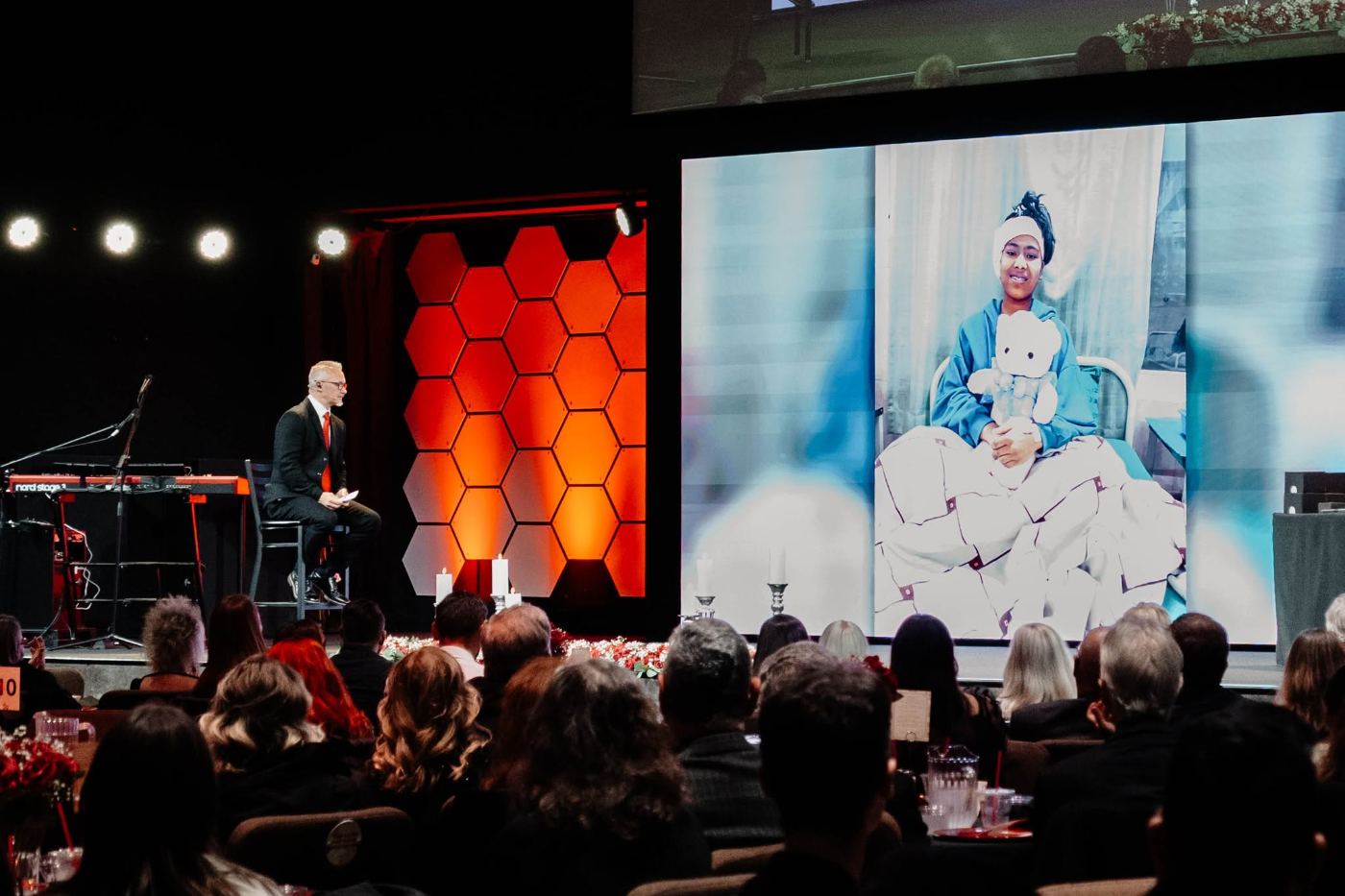
A brain-tumor survivor who returned to her studies and, this August, will travel to Istanbul to tell her story in her own words.
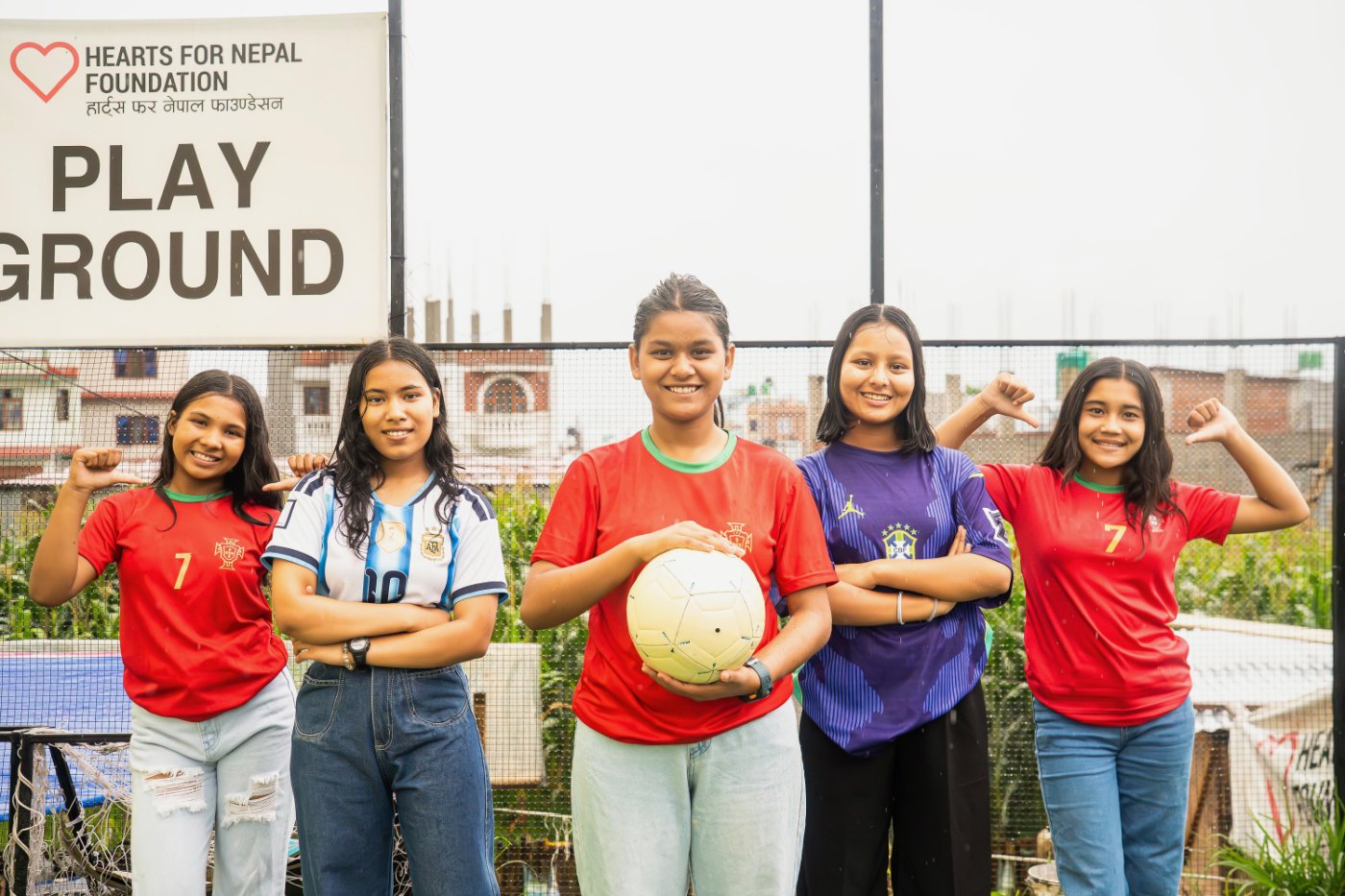
This month, something special happened at our girls’ school in Nepal. For the first time ever, they wore jerseys on Jersey Day — a school-wide celebration of the FIFA World Cup.
To most people, that might sound like a small thing. For our girls, it was anything but.
Girls living in hostels in Nepal are often marginalized, receiving only the most basic necessities. When schools hold special celebrations and holiday events, these children are frequently left out — unable to participate, standing on the sidelines while their classmates celebrate. The social impact is real. It’s isolating, and it reinforces the feeling of being “less than” their peers.
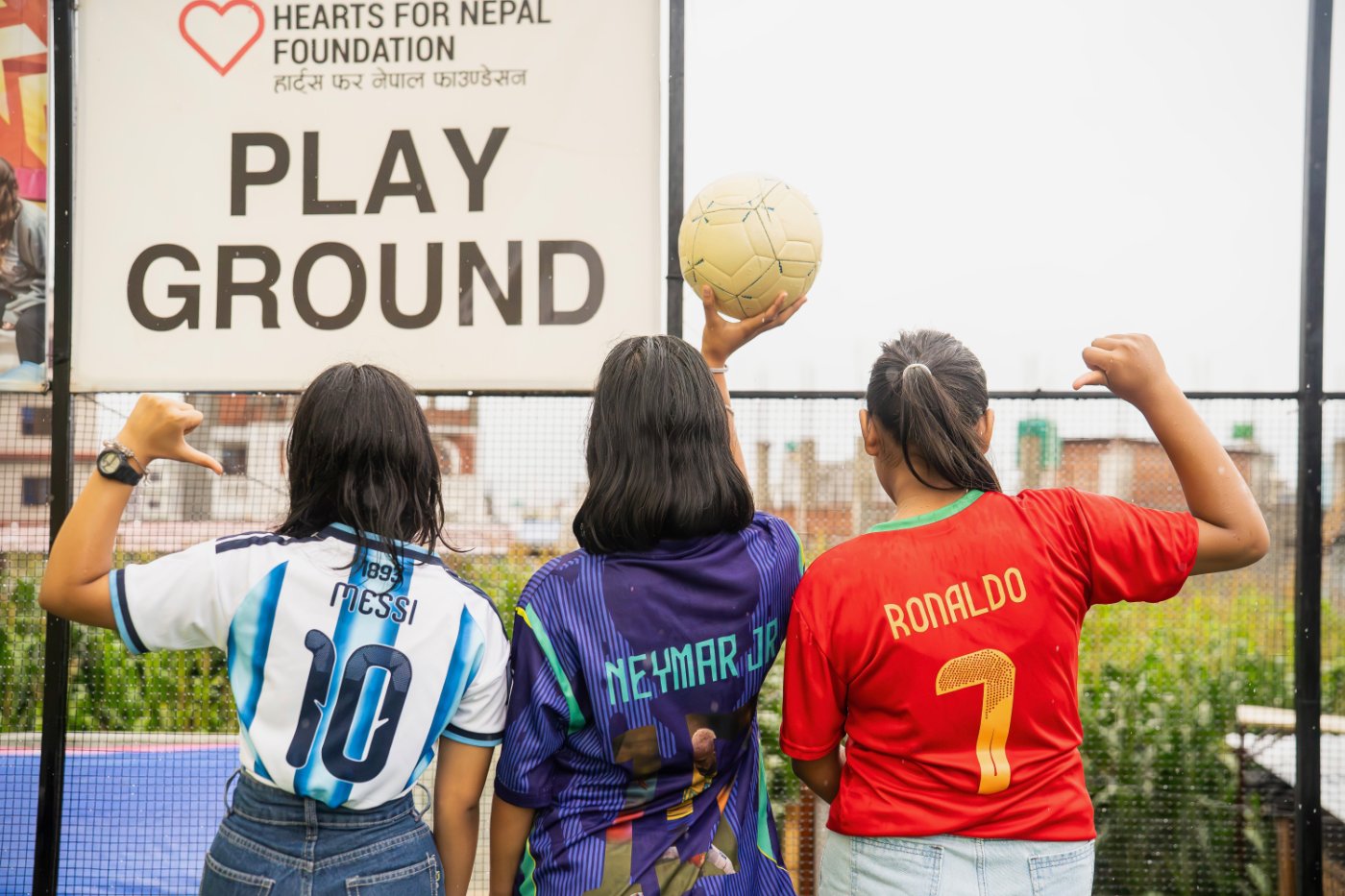
Messi, Neymar Jr. and Ronaldo — worn with pride at the Hearts for Nepal playground.
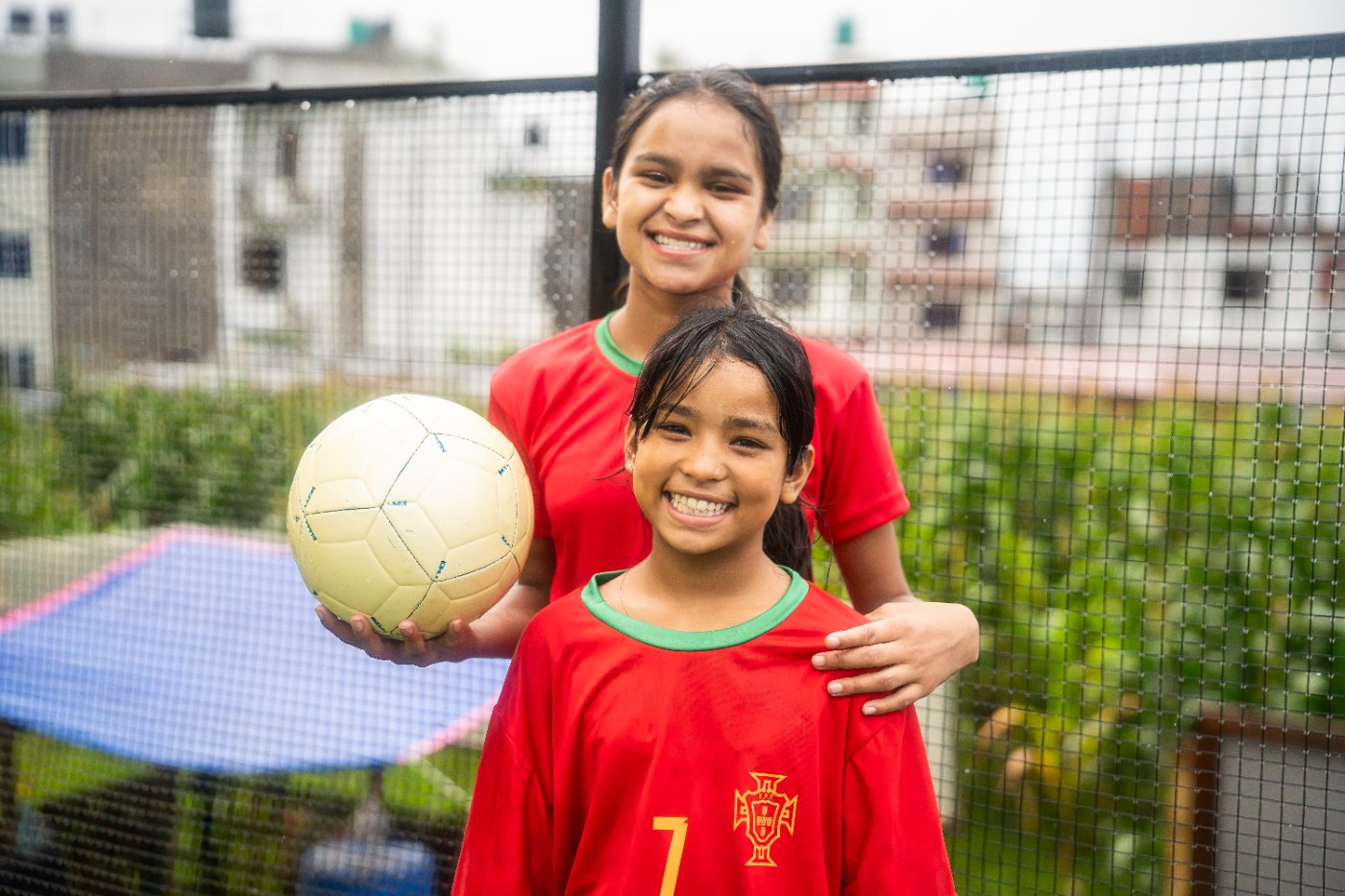
This time, our girls didn’t watch from the sidelines. They showed up in their jerseys, joined the celebration, and stood shoulder to shoulder with their classmates — included, confident, and valued.
It’s the little things like this that build character and strengthen the heart. A jersey is just fabric, but what it represents — belonging, dignity, and worth — lasts far beyond a single school day.
Because of You
Moments like this are only possible because of the generosity of our partners. Your support allows us to care for these young women beyond the base necessities — to meet not just their physical needs, but their emotional and social ones too.
You’re not just providing for these girls. You’re restoring dignity, one small moment at a time.
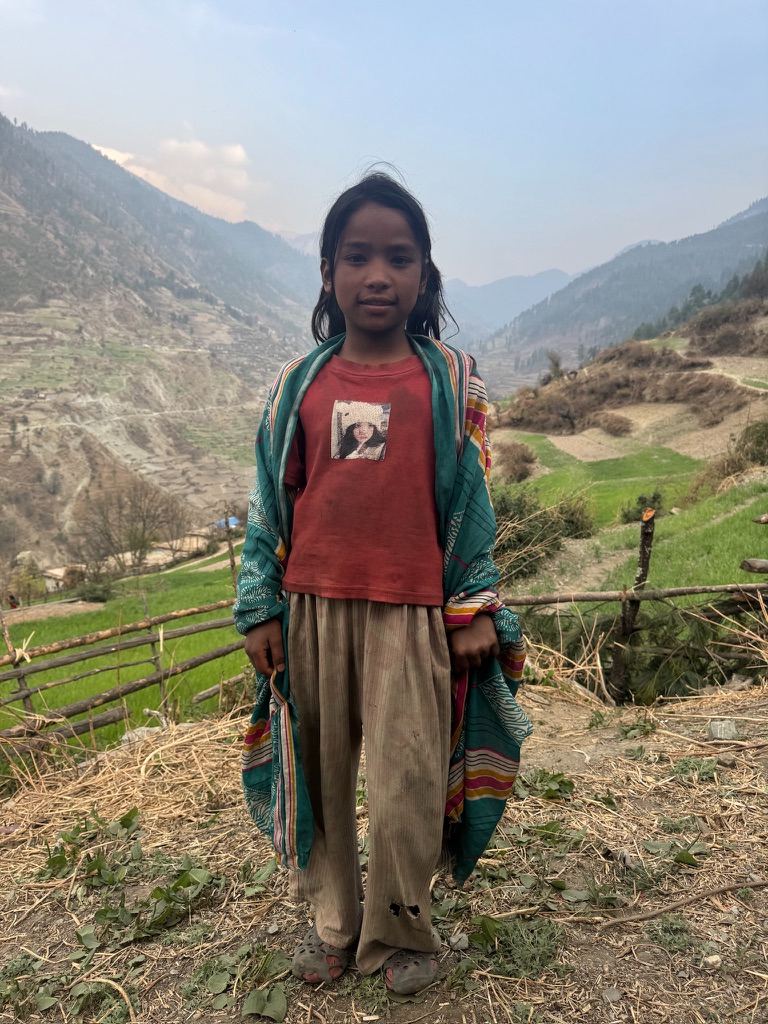
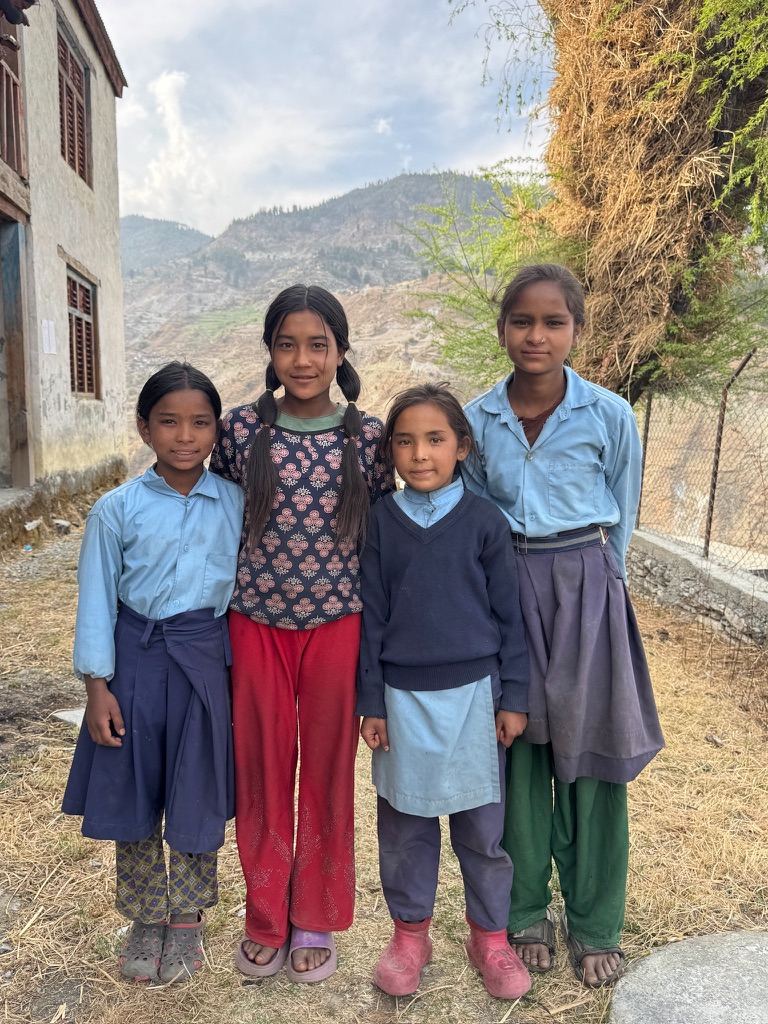
High in the rugged hills of Nepal’s Chitwan District — far above the roads, the markets, and nearly everything the modern world takes for granted — live the Chepang people. And it is from one of their remote mountain villages that Hearts for Nepal has had the privilege of welcoming four new daughters into our family.
Who are the Chepang?
The Chepang are one of Nepal’s indigenous peoples, officially classified by the government as one of the country’s most highly marginalized communities. Numbering just over 84,000, they live scattered across the steep highlands of the Chitwan, Makwanpur, Dhading, and Gorkha districts. Once semi-nomadic hunter-gatherers of the forests, most Chepang families today survive on small plots of subsistence farmland carved into the hillsides — land so thin and dry that in many households, the harvest cannot feed the family for a full year.
Their villages are among the hardest places in Nepal to reach — high, remote, and rugged, accessible only by long treks up mountain trails. Literacy rates are among the lowest in the nation, access to clean water and health care is scarce, and generations of exclusion have left the Chepang largely invisible to the systems meant to serve them. If the Lock of Nepal holds any girl back, it holds a Chepang girl hardest.
Four new daughters
Out of this place, four girls have come to us — and what a privilege it is. Their hearts are sweet. They carry a genuine desire to please, a hunger to learn, and a resilience forged in the highlands. Where the world sees a marginalized people, we see four remarkable young women with a bright future ahead of them. They are now home, in school, well-fed, and surrounded by sisters — and we are watching them bloom.
Water and dignity in the highlands
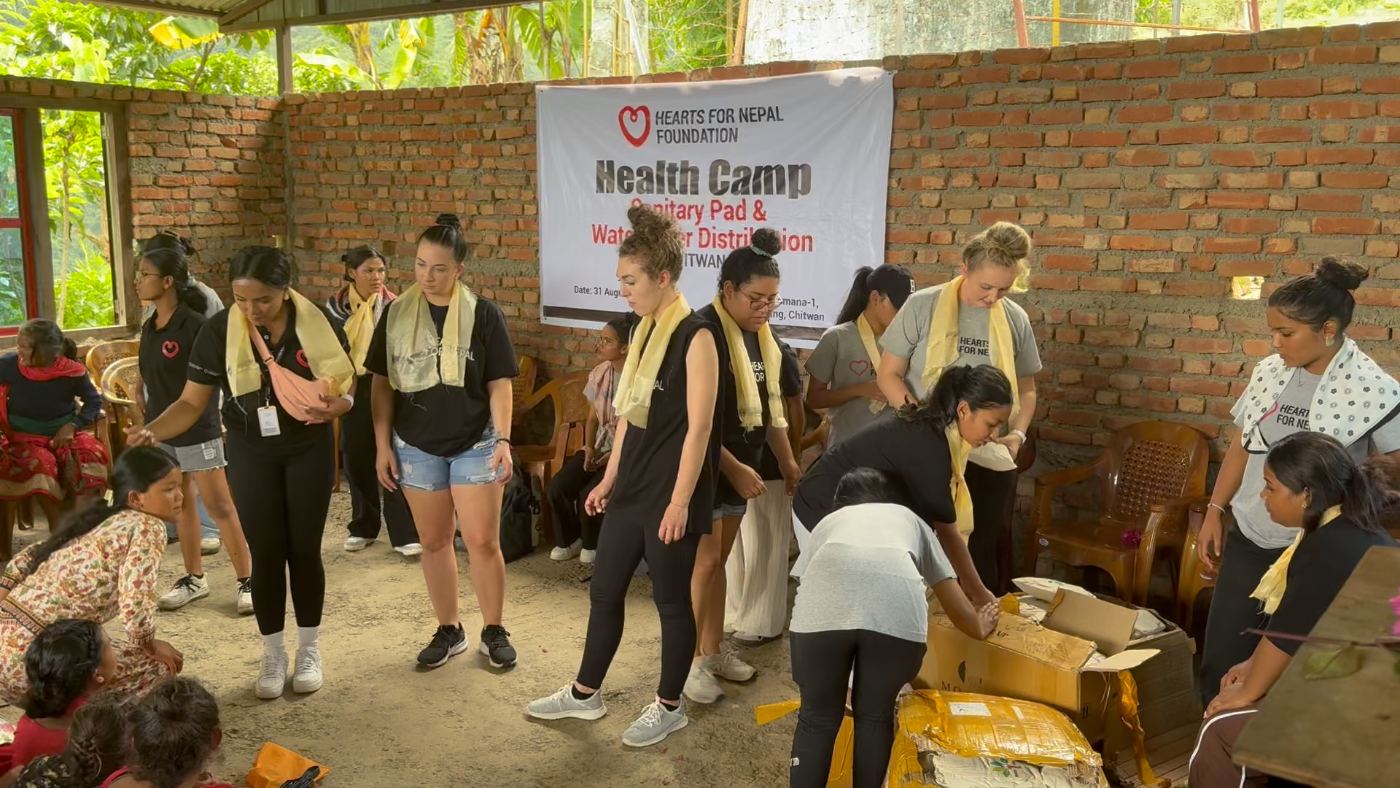
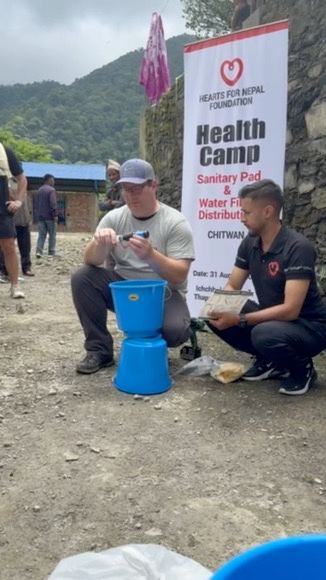
Our commitment to the Chepang does not end with the girls who have come to live with us. Hearts for Nepal has gone up into these villages to serve the community they came from — bringing clean water and something most people never think about: dignity.
A Hearts for Nepal health camp in Chitwan — sanitary pad and water-filter distribution.
In these remote areas, most girls cannot attend school for a full week every month once their menstruation cycle begins. One week a month, every month — that is a quarter of a girl’s education, quietly stolen. So we have carried out sanitary pad distributions throughout the region, providing washable, reusable pads that last. It sounds simple. It has been life-changing. Girls who once stayed home in shame now stay in school — and a girl who stays in school is a girl whose future stays open.
Demonstrating a clean-water filter for families in the highlands.
Four daughters from the highlands. Clean water flowing where there was drought. Girls sitting in classrooms who used to sit at home. This is what it looks like to unlock the door of Nepal.
Reaching the most forgotten people, in the most forgotten places — one life at a time.
A journey that changed three lives
Three girls from the mountains of Mugu
On our most recent trip to Nepal, Hearts for Nepal welcomed three precious girls from the remote mountain district of Mugu — one of the most isolated and impoverished regions in the country.
Life in Mugu is marked by extreme hardship. Many families live without electricity, hot running water, indoor plumbing, or access to quality healthcare. Food insecurity and malnutrition are common, schools are limited, and reaching the outside world is incredibly difficult. During the rainy season, roads often become impassable, leaving entire villages cut off for weeks.
For these girls, simply reaching us was an incredible journey. They first walked for an entire day through the mountains just to reach the nearest road. From there, they traveled for three days by bus over rugged mountain roads before finally arriving at our girls’ home.
When Shiparah, Sryrisma, and Junia arrived, many of life’s everyday comforts were completely new to them. For the very first time, they experienced hot running water, an indoor bathroom, a warm shower, ice cream, and consistent, nutritious meals. Things that many of us take for granted were unforgettable firsts for these precious girls.
But what they have received is far greater than physical comforts. They now have a safe home. They have loving caregivers. They have access to education, healthcare, proper nutrition, and the opportunity to dream about a future that once seemed impossible.
Their journey from the mountains of Mugu is more than a change of location — it is the beginning of a brand-new life.
A new life — safe, in school, and dreaming of the future.
Please continue to pray for Shiparah, Sryrisma, and Junia as they adjust to their new home and begin the incredible journey of hope, healing, and opportunity. Together, we are not just changing lives — we are changing generations.
The girl in the photograph
The story of Aarti Badi
I still remember the first time I traveled to her village. It is called Balchaur — a place people only want to be from, never a place anyone would choose to go to. Walking into it that first time was an intense experience I have never forgotten.
There was no modern construction of any kind — only mud-and-manure huts, their walls pressed together from clay, manure, and sticks gathered by hand. That was home. Everything a family owned had to be found in the forest, because they were not allowed to buy milled lumber. They were not allowed to improve their lives. They could only gather what the woods would give them, squat on government land that would never be theirs, and try to build something out of nothing.
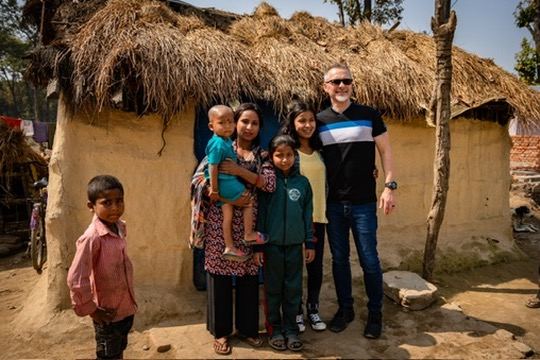
Balchaur — mud-and-thatch homes, and the families who have almost no choices.
This is the reason so many young girls in places like this are sold into sex trafficking — by their very own parents. It is not for lack of love. It is that generations of crushing poverty and the systemic injustice of the caste system leave a family with almost nothing, and almost no choices. For far too many of these girls, the only future anyone could imagine was to be sold. That was the future waiting for the daughters of Balchaur.
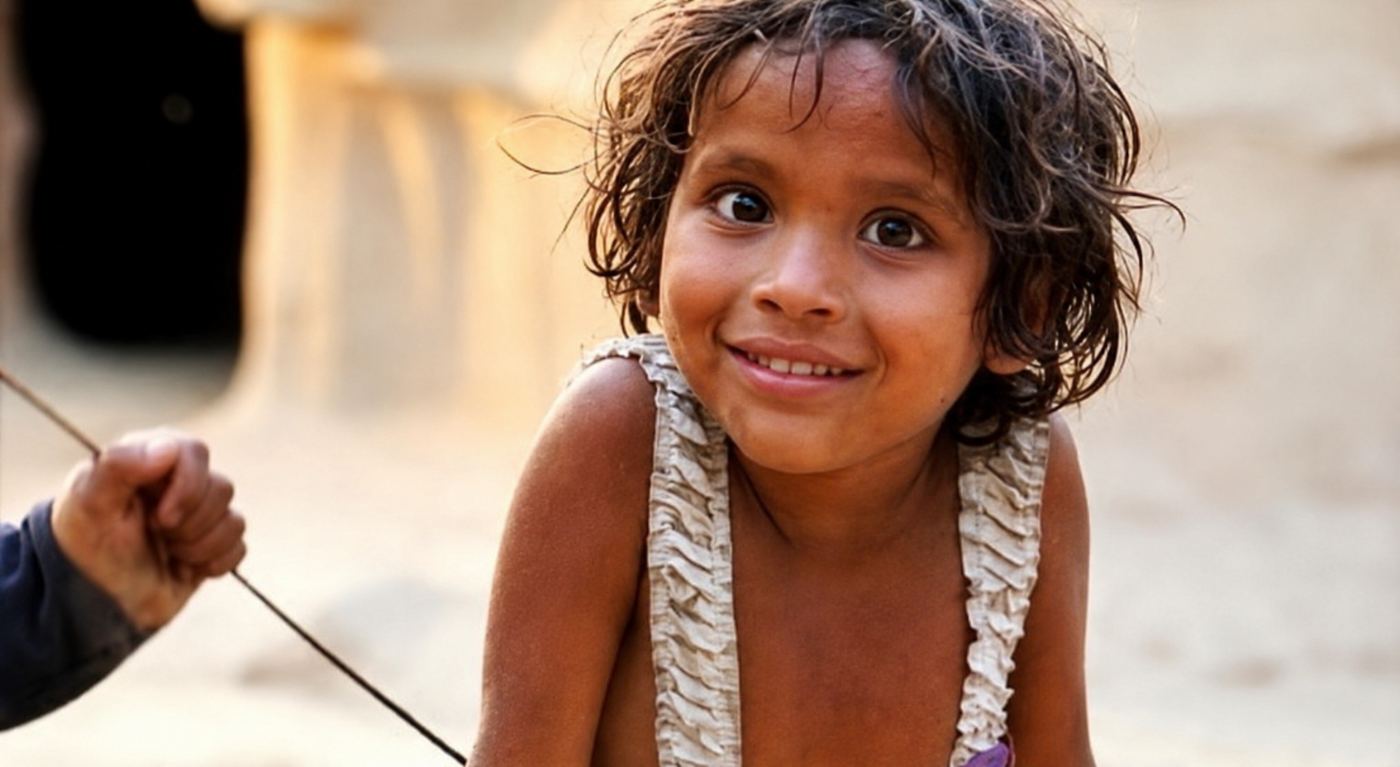
I had my camera with me that day, walking slowly through the village. And there, in the middle of it all, I saw a young girl. She was striking. I lifted my camera and took her picture. I did not know her name. I did not know her story. But I never forgot her face.
What I could not have known — what I never could have imagined — is who that little girl would become.
The striking child in my photograph would grow up to become one of our daughters: rescued, protected, loved, and educated. She would be forever changed as part of our program.
The girl in the photograph, today — safe, in school, and full of promise.
Her future was diverted — turned away from something catastrophic and toward something amazing. Today she is safe. Today she is in school. And today she carries incredible promise — a life full of possibility that the village she was born into could never have given her. This is the power of this work: one little girl, one life, transformed forever.
A future filled with hope
Sandhya Nepali · College Program
This trip, we had the privilege of welcoming Sandhya Nepali into the Hearts for Nepal family. Sandhya’s story is one of perseverance.
Orphaned at a young age, she was raised by her grandmother in a remote mountain village where poverty is a daily reality. Opportunities are few, resources are scarce, and simply pursuing an education requires determination that many of us can hardly imagine. Yet Sandhya refused to let her circumstances define her future.
Her academic record reflects her incredible work ethic. With a 3.8 GPA, she has consistently demonstrated excellence in her studies while overcoming challenges that would discourage most people. Today she is pursuing her dream of becoming a nurse — understanding that education is a pathway to serving others, lifting her family out of poverty, and bringing hope to her community.
When opportunity meets determination, lives are forever changed.
Meet Muskan
A story of redemption, full circle
Meet Muskan — a beautiful little girl whose story reminds us that redemption can reach across generations. Muskan was abandoned by her mother and has been raised by her aunt in difficult circumstances. Like so many children in Nepal, she had no control over the circumstances she was born into.
What makes her story especially remarkable is that it comes full circle. Back in 2012, Muskan’s mother was one of the first girls Hearts for Nepal attempted to rescue. She chose not to remain in the program, eventually left, became pregnant, and later abandoned her daughter. For years, it seemed like another heartbreaking story of poverty and brokenness — but the story wasn’t finished.
Today, we have the incredible privilege of welcoming Muskan into our care. She now has the chance to grow up in a safe home, receive a quality education, and discover a future filled with purpose. Her story does not have to end where her mother’s story did.
This is how generational cycles are broken.
Meet Bandana
A fighter’s story
Bandana is a courageous young girl whose life has already been marked by incredible challenges. She has undergone two major ear surgeries. Without those life-saving procedures, doctors believe she would have developed spinal meningitis — a condition that could have claimed her life.
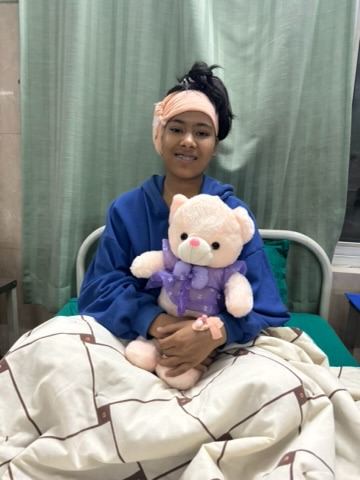
Bandana recovering after surgery — a smile that says everything about her spirit.
Despite everything she has endured, Bandana is a fighter. While she continues to face hearing loss, her surgeries have been as successful as possible. Her next step is receiving hearing aids, which will help her hear better, learn more effectively, and experience the world with greater confidence.
Hope often comes through the generosity of people who choose to make a difference.
Anu’s story
Twelve years with the Hearts for Nepal family
When I was 7 years old, I had the opportunity to come to Hearts for Nepal Foundation. Before that, life was very difficult for me. I never imagined how much my life would change after becoming part of this family.
When I was still very young, I was diagnosed with a brain tumor. It was one of the hardest times in my life. The doctors told us that I needed brain surgery, and I was scared. But during that difficult journey, Papa stood by my side every step of the way. He supported me with love, care, and encouragement, and he continues to support me even today.
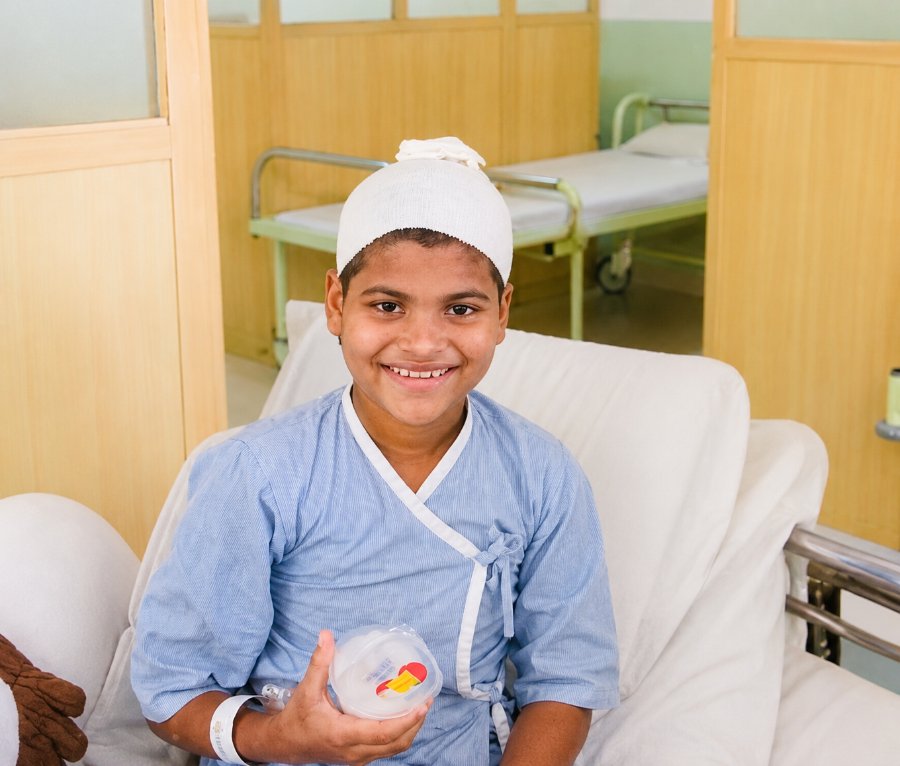
Anu recovering after her brain surgery — smiling through one of the hardest seasons of her life.
Most of all, I thank God for saving my life and giving me a second chance. I am also deeply grateful to Papa and everyone at Hearts for Nepal Foundation for believing in me, caring for me, and helping me through every challenge.
Today, I feel truly blessed to be part of the Hearts for Nepal Foundation family. Thank you for changing my life and giving me hope for the future. I will always be grateful.
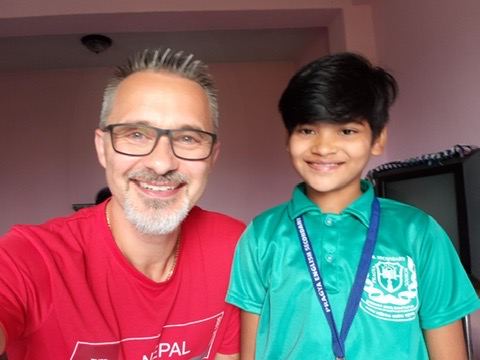
Anu with Pastor Dennis, back at school and thriving.
“I am not what happened to me. I am what I was given the chance to become.”
Hearts for Nepal Foundation
Ways to Give
See what your generosity can do. Every gift, at every level, goes 100% into Nepal.
Give Now
Credit · Debit · ACH · Apple Pay · Google Pay · Recurring
With the growth and popularity of crypto, you can now give straight from your crypto wallet. This saves on transaction fees and simplifies the overall process of donating crypto.
There is currently $234 billion in DAF accounts ready and able to be distributed to 501(c)(3) organizations. Make a charitable contribution, receive an immediate tax deduction, and continue making donations to Hearts for Nepal as a 501(c)(3) organization.
Donating stock is one of the most tax-efficient ways to give. A direct stock donation through Overflow means up to 20% more value for your donation because of the capital gains tax savings.
When you donate appreciated assets you have held for a year or more, such as real estate or stocks, you receive a charitable giving deduction for the fair market value of the asset (up to 30% of your AGI) and normally avoid capital gains tax, too.
Benefits: minimize your tax liability · receive a charitable income tax deduction · wisely benefit your heirs
A bequest is written in a will or trust and directs a gift to be made to a qualified, tax-exempt charity — like Hearts for Nepal — when you pass away.
Whether it's a gift of cash, real estate, or the residual of your estate, a bequest allows Hearts for Nepal to use your assets to continue protecting, educating, and empowering vulnerable girls in Nepal while also benefitting your family and loved ones.
Benefits: receive an estate tax charitable deduction · reduce the burden of taxes on your family · retain assets during life · flexible and can be modified at any time
If you're 70½ or older, you can give a rollover gift of up to $100,000 from your IRA and not add a penny to taxable income. Plus, if you are age 72 or older, your gift will count toward your required minimum distributions.
Benefits: avoid taxes on transfers up to $100K · not subject to the deduction limits on charitable gifts · further the mission of Hearts for Nepal
You can sign up today for as little as $5 a week to change a life forever.
What is a Legacy Partner?
A Legacy Partner gives a steady, recurring gift that lets us plan, protect, and educate with confidence. It is the backbone of everything we do — dependable love a girl can count on year after year.
Giving levels
Choose the level that fits your heart. Every gift, at every level, goes 100% into Nepal.
♥
{{ tr.name }}
{{ tr.range }}
100% of your contributions go into Nepal toward the funding of this operation.
From a few of our Legacy Partners
Some of the people who make this work possible, in their own words.
“
The Hearts For Nepal Foundation has captured our hearts from the first time we saw the girls’ faces in 2022. Seeing their confidence and beauty grow, it was a no-brainer.
Read more →
Legacy Partners
Since 2022
“
I choose to support Hearts For Nepal because I believe the greatest investment we can make is in people — changing lives in a way that reaches families, communities, and future generations.
Read more →
A Legacy Partner
Hearts for Nepal USA
“
My husband and I became Legacy Partners because we believe in what Hearts for Nepal is doing. I’ve seen first hand what it does for the girls they help.
Read more →
A Legacy Partner
Hearts for Nepal USA
“
It isn’t a hand out, it’s a guaranteed hand up. We love seeing how much each girl has grown over the years — the joy in their lives is REAL.
Read more →
A Legacy Partner
Hearts for Nepal USA
“
The first time I heard the testimony of one of the girls, I couldn’t hold back my tears — tears of joy at how God had completely transformed her life.
Read more →
Legacy Partners
Hearts for Nepal USA
“
In April 2024, I traveled to Nepal and saw firsthand the impact Hearts for Nepal is having — giving girls a way to escape trafficking and instead a hope and a future.
Read more →
A Legacy Partner
Hearts for Nepal USA
“
Being Legacy Partners has given our family the opportunity to reach across the world and offer hope and a future to young girls who otherwise would have a bleak and painful path.
Read more →
Isaac & Tessa
Legacy Partners
“
When I learned about Hearts for Nepal, there was no question in supporting and praying for these precious, vulnerable girls to experience the love of Jesus Christ.
Read more →
A Legacy Partner
Hearts for Nepal USA
“
Knowing that we're helping rescue girls from the sex trade is incredible, but what touches our hearts even more is seeing their lives completely transformed.
Read more →
Legacy Partners
Experience Church
“
We have both traveled there and seen first hand the impact that being a Legacy Partner can have. It means a life forever changed.
Read more →
Legacy Partners
Experience Church
“
The Hearts For Nepal Foundation has captured our hearts from the first time we saw the girls’ faces in 2022. From the point when we learned about the amazing work the foundation does, we knew we had to do whatever we could to give to the cause — seeing the girls’ confidence and beauty shine through and grow, and learning about the dedication to their education and health, it was a no-brainer.
I (Brittney) had the chance to go with the team to Nepal and see the impact first hand. The transformation — between where they came from and how they were living, to where the girls are now — truly impacted my heart and gave me an even deeper appreciation for the work the foundation does. Knowing that our financial assistance can help provide such an incredible impact encourages us to keep giving, and to encourage others to do the same.
Legacy Partners
Since 2022
“
I choose to support Hearts For Nepal because I believe the greatest investment we can make is in people. There are many worthy causes, but I am especially drawn to organizations committed to changing lives in a lasting way. When a person’s life is transformed with hope, opportunity, and purpose, the impact reaches far beyond that individual — it can influence families, communities, and future generations.
For me, supporting Hearts For Nepal is about being part of something bigger than myself. I want my giving to have a meaningful and lasting impact, helping bring hope where it’s needed most and creating opportunities for lives to be forever changed. It’s a privilege to stand behind a mission that reflects compassion, restoration, and the belief that every person is valuable and deserves the chance to build a brighter future.
A Legacy Partner
Hearts for Nepal USA
“
My husband and I became Legacy Partners because we believe in what Hearts for Nepal is doing in Nepal. I’ve seen first hand, through videos and personal testimonials, what Hearts for Nepal does for the girls they are able to help. Not just the physical, but the emotional and spiritual support, love, education, and leadership teaching they all receive — giving them an actual chance in a still very active caste system.
A Legacy Partner
Hearts for Nepal USA
“
We support Hearts for Nepal because of the care, benefits, and opportunities it gives these young girls and women. It isn’t a hand out, it’s a guaranteed hand up — and they also have to work for it with consistency, a true life skill.
We love seeing how much each and every girl has grown over the years! The first photo of each young lady compared to a most recent is NIGHT and DAY, and the joy you get to witness in their lives — whether through photos, videos, or FaceTime — is REAL! We both cherish Hearts for Nepal and are grateful for the real-life changes and impact it makes for these incredible, precious, sweet, and strong young ladies!
A Legacy Partner
Hearts for Nepal USA
“
The first time I heard the testimony of one of the girls from Hearts for Nepal, I couldn’t hold back my tears. They weren’t tears of sadness or pity — they were tears of joy because I saw the incredible way God had completely transformed her life. Hearing her story reminded me that God is still in the business of rescuing, restoring, and redeeming lives.
In that moment, something changed in our hearts. We knew we wanted to be a part of what God is doing through Hearts for Nepal. It’s such a blessing and an honor to support a ministry that shares the love of Jesus and brings hope, healing, and a future to these precious young ladies. Seeing God work through this ministry has strengthened our faith, and we’re grateful to play even a small part in what He’s doing.
Legacy Partners
Hearts for Nepal USA
“
In April 2024, I had an opportunity to travel to Nepal and see firsthand the impact that Hearts For Nepal is having in this country.
The biggest reason that I support HFN is that it provides a way for girls to escape a life of being sex trafficked and instead gives them an opportunity to have a hope and a future.
When I met the young women whose lives are being changed, I was even more impacted. Hearing firsthand some of their stories of where they came from and seeing where they are now, it is a blessing to be able to give and be a part of that from the other side of the world.
Beyond the girls, HFN is also impacting the country by providing clean water, food, leadership training and so much more, of which I was also able to see firsthand.
I am so grateful that I am able to be a part, in a small way, of what God is doing in the nation of Nepal.
A Legacy Partner
Hearts for Nepal USA
“
Hearts for Nepal is such an amazing ministry. Being Legacy Partners has given our family the opportunity to reach across the world and offer hope and a future to young girls who otherwise would have a bleak and painful path.
It’s a blessing to us to be able to be the hands and feet of Jesus through Hearts for Nepal.
Isaac & Tessa
Legacy Partners
“
Years ago, I joined a missions trip to Southeast Asia, which included visiting homes for homeless and trafficked children in Manila, Taipei and Guangzhou.
When I learned about Hearts for Nepal, there was no question in supporting and praying for these precious, vulnerable girls to be given an opportunity to experience the love of Jesus Christ and the transformation available only in Him.
A Legacy Partner
Hearts for Nepal USA
“
My husband and I have been Legacy Partners for quite some time now, and people sometimes ask us, "Why this ministry? There are so many great causes."
The answer is simple. There's something so special about being part of God's kingdom work in this way. Knowing that we're helping rescue girls from the sex trade is incredible, but what touches our hearts even more is seeing their lives completely transformed. They receive hope, healing, and a future, and many go on to strengthen their communities and impact future generations.
One of the things that gives us so much confidence is that our pastors and ministry team travel to Nepal two or three times each year. They see the work firsthand, and they share regular reports with us. We know how the funds are being used, and we appreciate the transparency and accountability behind the ministry. That gives us great confidence that our giving is truly making a difference.
It's amazing to be part of something that has such an eternal impact. We feel truly blessed to be Legacy Partners at Experience Church and to support the work God is doing in Nepal. We're grateful to play a small part in seeing lives changed for His glory.
Legacy Partners
Experience Church
“
Being a Legacy Partner with Hearts for Nepal is so important to my husband and I. We have both traveled there and seen first hand the impact that being a Legacy Partner can have. It means a life forever changed, the Kingdom of God growing, clean water and hygiene products provided, a new chance at life for a young girl destined to prostitution. It’s an opportunity to give that brings hope and causes lasting impact. Our lives are forever changed because of the beautiful opportunity we’ve had to partner with Hearts for Nepal.
Trips, gatherings, and moments to connect with the mission of Hearts for Nepal.
For registered travelers
Trip Portal
Your itinerary, flight details, hotel information, packing lists, cultural briefings, and the printable travel guide — all in one place. Sign in with the email you registered with.
Sunday, August 23, 2026 · German Homes · Bhaktapur, Nepal
More than 500 leaders — the largest gathering in the conference's history — filled German Homes for a full day of leadership training and the launch of Built or Broken, the newest book from Dennis J. Cummins.
Success in Istanbul: Unlocking the Door to a Bigger World
We have achieved a monumental marker: unlocking the door for the girls in our program to see a bigger part of the world — and to open their imagination. It is hard to imagine something you have never seen, and harder still to believe for it. This August, that lock opened.
This trip was monumental for our NGO and for our credibility as an organization: gaining visas for our girls and traveling with them to another nation. In Istanbul we also held an incredible expo for our NGO, meeting the president of the Non-Resident Nepali association of Istanbul — opening a real path forward for our girls to gain education and new career paths for their future.
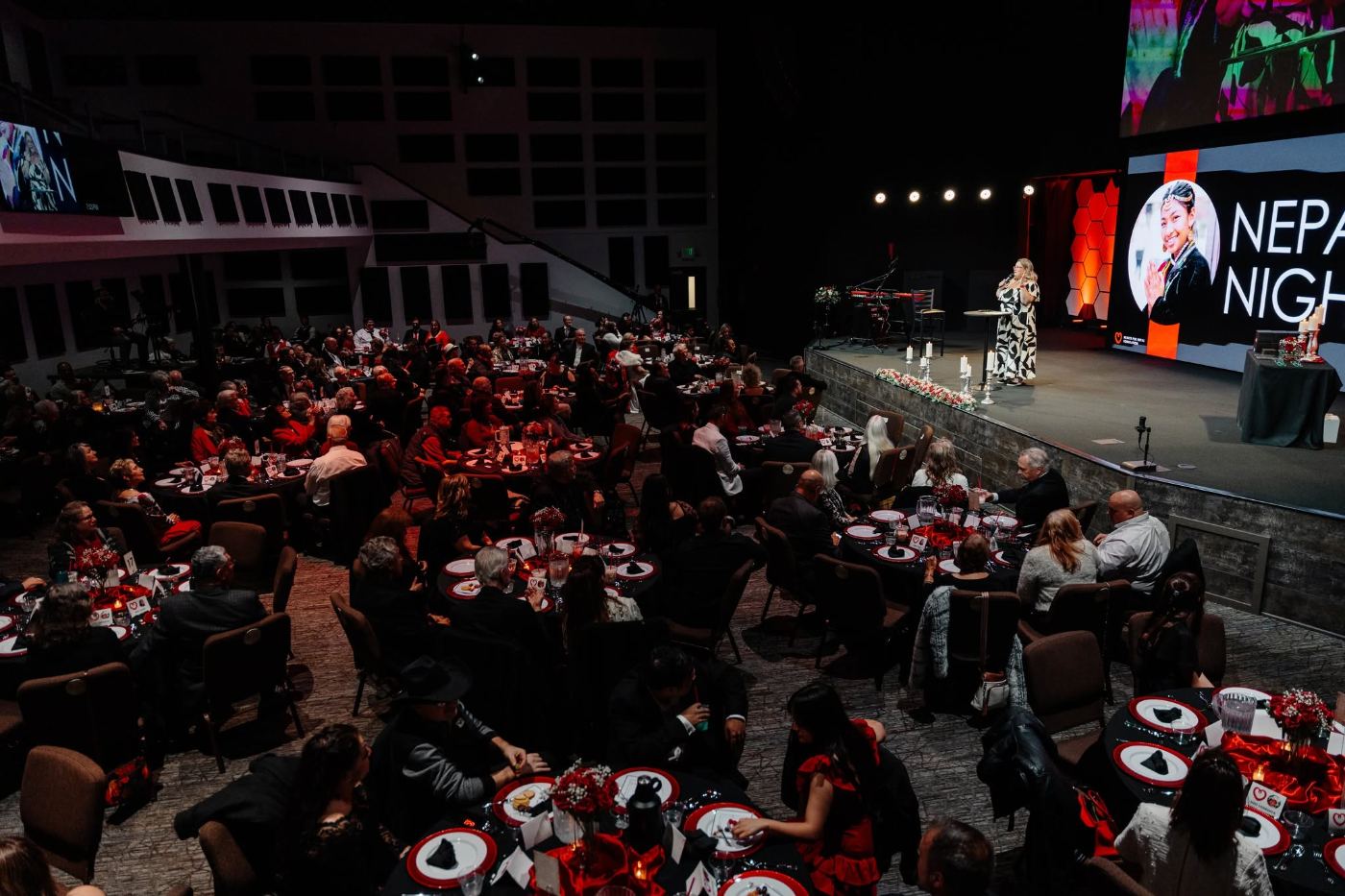
On Friday evening, November 13, Hearts for Nepal invites you to Nepal Night — a gala evening to celebrate everything happening through the work in Nepal, to honor the Legacy Partners who have made it possible, and to give you a night you will not forget.
For more than a decade, Hearts for Nepal has been rescuing, protecting, educating, and empowering vulnerable girls in Nepal — transforming the nation, one life at a time. Nepal Night is the one evening of the year when all of that work comes into the room: the stories, the milestones, the partners who carried it, and the girls themselves.
An evening to remember
Celebrate the work. Hear firsthand what has happened this year in Nepal — the rescues, the graduations, the recognition, and the lives being rewritten.
Honor our Legacy Partners. We will take time to recognize the faithful partners whose generosity has built this work from the ground up.
Meet the girls — live from Nepal. The moment that makes Nepal Night unlike any other event: you will meet and experience the girls, live from Nepal, and hear their stories in their own voices.
Enjoy a beautiful night out. Dinner, celebration, and an atmosphere worthy of the occasion — come dressed for a gala and ready to be moved.
Sponsor a table
Nepal Night is built around the table. Sponsoring a table is the perfect way to bring your family, your friends, your business, or your team — to share the evening together and to put your generosity to work where it changes everything.
Table sponsorship: pricing to be announced — seats a full table of guests
Individual tickets: pricing to be announced, per person
Date: Friday, November 13, 2026
Location: to be announced
Attire: gala / cocktail
Reserve: reservations open soon
Come and see. One night. One room. One nation being transformed — one life at a time. Reserve your table today.
Open exclusively to Experience Church Dream Team members · Applications close September 1
For years I’ve wished I could simply hand people a plane ticket and say: come and see for yourself. In April 2027, I’m taking a small team to Nepal — and this is your invitation to be part of it.
You’ll meet our staff and our girls face to face. You’ll walk the ground where their stories began and see where they’re headed. And you’ll come to understand what we call the Lock of Nepal — the invisible barrier that keeps these girls from ever experiencing the wider world — and the part you can play in breaking it. This isn’t a sightseeing tour. It’s twelve days of seeing, serving, and being changed.
Who Can Go
This trip is open only to Experience Church Dream Team members. Because of the demands of international travel and the conditions on the ground, every team member must be physically and mentally stable and ready for a rigorous, fast-moving trip — long flights, full days, and a developing-world setting far from home.
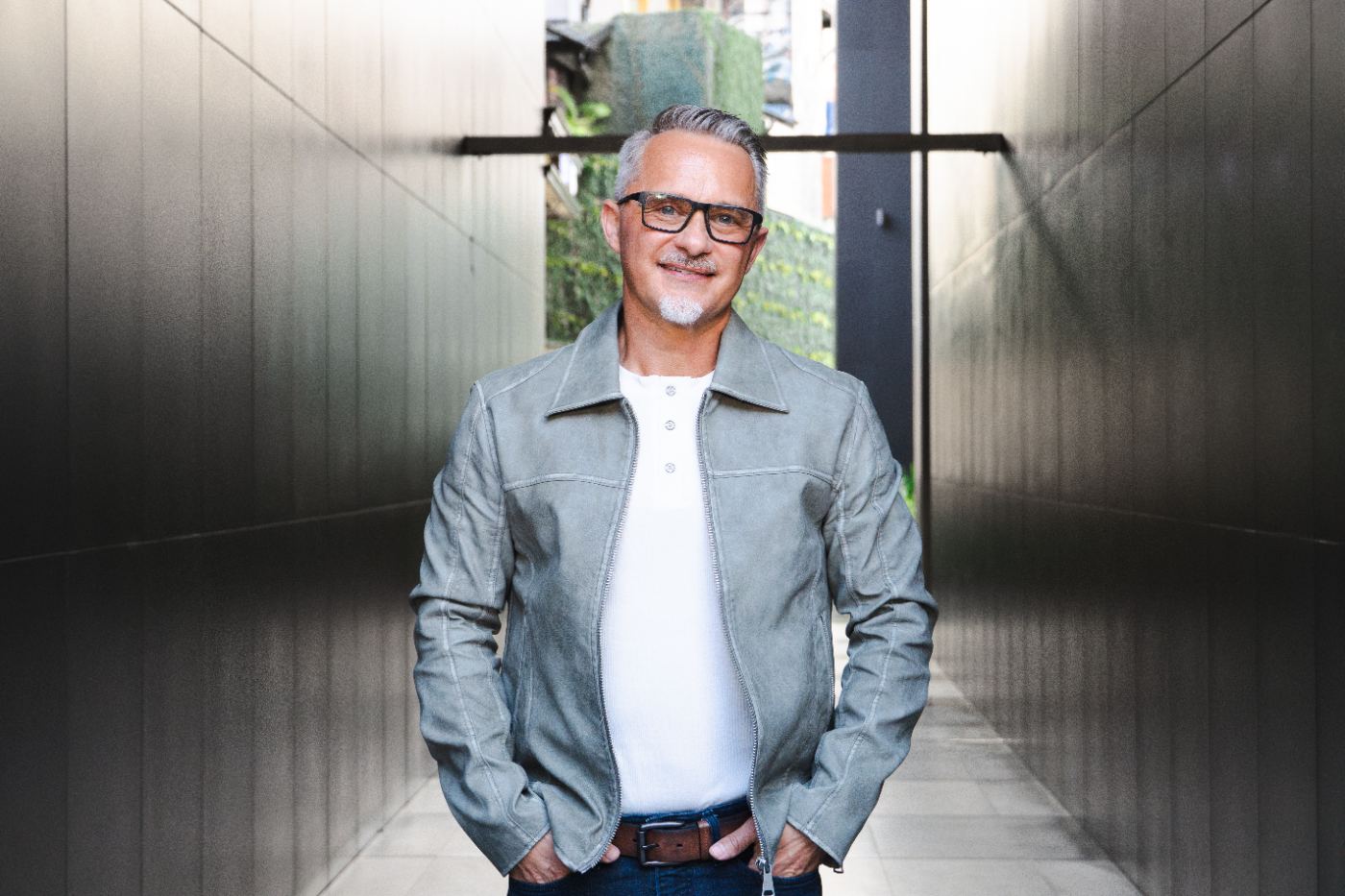
Founder and President of Hearts for Nepal USA, leading the mission from Puyallup, WA.
People ask me why I do this. The answer is simple.
Since 2009, I've carried a burden I can't put down — making a lifelong impact in the life of every girl entrusted to our care. Not a moment. Not a rescue and a photograph. A lifetime.
I don't just want to protect these girls. I want to raise them. I teach them leadership. I teach them character. And then I get to do the best part of all — I get to watch them grow. I watch a frightened child become a confident young woman. I watch her step into a classroom, then into a career, and become a business professional who will lead her own family, her own community, and help transform her nation.
That's the heart behind it. Not to be remembered, but to leave something in these girls that lasts long after I'm gone. Because you don't build a legacy by holding on to people — you build it by pouring in so deeply that when they walk into their future, they carry something eternal with them.
This is why I do Hearts for Nepal — transforming the nation of Nepal, one life at a time.
Vice President
Jack Moran
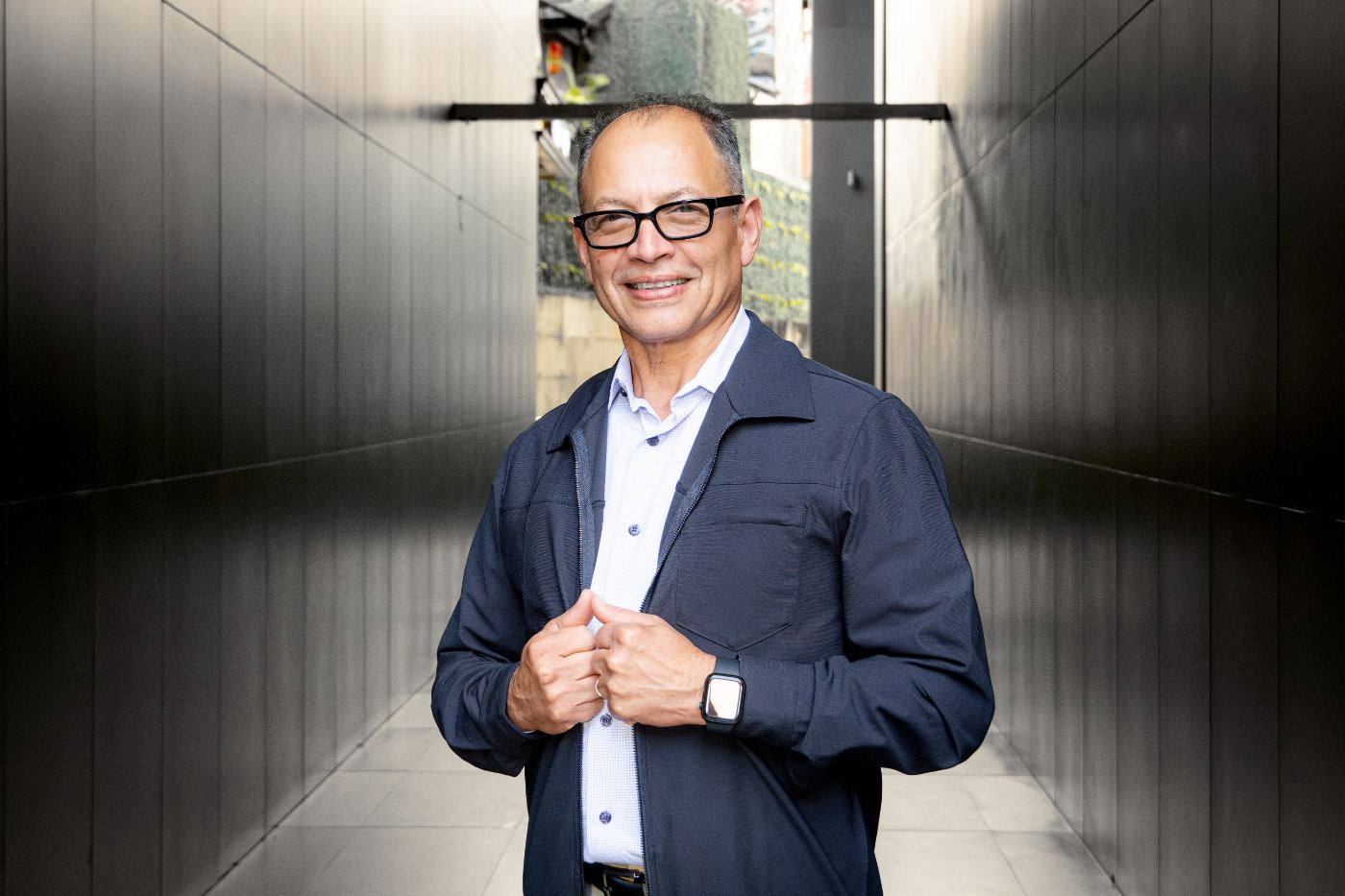
Vice President of Hearts for Nepal USA.
Being part of Hearts for Nepal is deeply personal.
I have witnessed firsthand how lives are being transformed through this ministry — children receiving love instead of abandonment, hope instead of despair, and opportunities that once seemed impossible.
My wife and I believe we are called to be faithful stewards of what we have been entrusted with — investing in something that will outlive us. It is a privilege to stand alongside this ministry and help raise future leaders who will impact Nepal for generations to come.
Ambassador
Jake Crause
Ambassador for Hearts for Nepal.
When I was invited to Nepal in early 2025, I went as a participant to help however I could. Two weeks later, I knew it was something I could put my name behind.
I spent that time getting to know the girls, learning how the home actually runs, and paying attention to where the resources go. It's the real thing. What got me most was sitting in on the weekly leadership training and hearing the girls discuss their personal insights into what they learned. They're becoming leaders, picking up life skills most kids their age never get close to, even here in America.
That's what has kept me engaged, working with Hearts for Nepal. Real people, real lives, and change I could see with my own eyes. Now I get to open doors for them — connecting these girls to a wider world, and being a voice that keeps finding new ways to move the mission forward.
Hearts for Nepal Foundation · Nepal
President · Nepal
Sanjeev Shah
President of the Hearts for Nepal Foundation, leading the in-country team.
I have been serving with Hearts for Nepal for the past five years. I believe that even the smallest acts of kindness can create lasting change, and I am honored to contribute to bringing hope, dignity, and opportunities to communities across Nepal.
I am especially grateful to serve under the leadership of our Founder Mr. Dennis Cummins. His mentorship has played a significant role in my personal and leadership development, shaping the way I think, lead, and serve others. It is a privilege to be part of an organization that is committed to making a meaningful and lasting impact.
As I look ahead, I am excited to continue this incredible journey alongside the amazing Hearts for Nepal family. Together, I believe we will keep bringing hope, transforming lives, and creating a brighter future for the communities we serve.
Compliance Officer
Chetraj Joshi
Compliance Officer, safeguarding standards and accountability.
I have been with Hearts for Nepal for the last two years. I'm proud to work here because we are dedicated to serving and uplifting the people of Nepal. Hearts for Nepal is more than just an organization to me—it is my family. Our love, care, and commitment make us different from others.
After joining this organization, I have learned many valuable things, especially about leadership and how generosity can change people's lives.
I am grateful to be part of this amazing team. I am committed to contributing my skills, dedication, and hard work to help Hearts for Nepal grow and fulfill its mission. Together, we can continue uplifting Nepal and creating lasting positive change.
Marketing Director / House Ward
Rojina Lama
Marketing Director and House Ward, caring for the girls day to day.
I have been serving at Hearts for Nepal for the past three years as the Marketing Director. During this time, I have grown so much both personally and professionally. I have learned photography, video editing, leadership, and gained confidence through the opportunities I've been given. I am truly grateful to President Dennis Cummins and the Hearts for Nepal family for believing in me and investing in my growth. It is a blessing and an honor to serve here.
House Warden
Sarika Shah
House Warden, keeping the girls’ home safe and steady.
I have been working with HFN as a House Warden for the past one year. During this time, I have learned responsibility, patience, and the importance of serving children with love and care. My role is to create a safe, positive, and supportive environment where children can grow and thrive. What makes HFN different is that it is more than an organization—it is a family that genuinely cares for every child. I am grateful to be part of HFN and look forward to continuing to serve and make a positive impact in the lives of the children.
Accountant
Khem Raj Joshi
Accountant, stewarding every gift with care and integrity.
I have been with HFN for the past three years. I joined HFN because I wanted to be part of an organization that cares for children, families, and communities with love, compassion, and service.
During my time here, I have grown both personally and professionally. As an accountant, I have learned responsibility, teamwork, leadership, and integrity while contributing to HFN's ministry.
What makes HFN special is its commitment to creating lasting change through education, child care, community development, and faith.
How we’re organized
Hearts for Nepal USA Puyallup, WA · nonprofit
Hearts for Nepal Foundation Registered NGO · Nepal
Residential Home
College Home
Water & Hygiene
Newsroom
In the news
Announcements and recognition from Hearts for Nepal and our partners on the ground.
Press Release•August 2026•Kathmandu, Nepal
International Author and Humanitarian Dennis Cummins Releases Built or Broken in Nepal
A new book on leadership, order, and accountability arrives as Nepal navigates a historic moment of national transition.
KATHMANDU, NEPAL — Dennis J. Cummins, president of Hearts for Nepal USA and author with more than fifteen years of sustained humanitarian and leadership work in Nepal, has announced the release of his new book, Built or Broken: Why Leadership Is the Discipline of Order, in conjunction with his current visit to Kathmandu.
The book, released in March 2026, examines a universal leadership principle Cummins argues has been observable across nations, civilizations, and institutions throughout human history: that leadership is not primarily about influence, charisma, or vision — it is about the disciplined establishment and maintenance of order. Systems that build genuine accountability and structural governance endure. Systems that substitute influence for order eventually fracture under pressure.
Cummins is releasing the book in Nepal at what he describes as one of the most significant leadership transition moments in the nation's modern history.
“I have been part of Nepal's story since 2009. I have walked alongside leaders in government, business, and civic life across this country for fifteen years. I am not here as an outside observer. I am here as someone with genuine investment in what Nepal becomes. And this book — which was not written about Nepal specifically — speaks directly to the moment this country is in right now.”— Dennis J. Cummins, Author and President, Hearts for Nepal USA
Nepal has entered a period of significant political and institutional transition following the events of September 2025, in which widespread public demonstrations — driven by longstanding demands for accountability, transparency, and effective governance — led to a change in government and national elections in March 2026. Cummins is clear about his position regarding those events.
“What I see at the heart of what happened in Nepal last September was a legitimate and ancient demand: to be governed well, by leaders who absorb consequence rather than avoid it. That demand I understand and I honor. What I cannot and do not endorse is the violence, the rioting, or the destruction of property that occurred in the course of those events. This book's core argument is that chaos cannot produce order. You cannot build accountability through destruction. The answer to broken governance is always the harder, longer work of building structures that hold — not the escalation of disorder.”— Dennis J. Cummins
Built or Broken is organized around fifteen chapters that trace the full arc of leadership from the individual to the institutional. Among its central arguments:
Chaos does not create leadership failures — it exposes what was already structurally weak.
Influence is not leadership. Influence gathers people. Authority governs them — and authority is responsibility accepted, not position assumed.
Nations move through three generational phases — builders, carriers, and consumers — and understanding where a nation sits in that cycle is essential for leaders who want to intervene before decline completes itself.
Self-governance is the first territory of leadership. External order cannot be established by leaders who have not first established order within themselves.
Clarity always costs — but ambiguity costs more. The leader who avoids difficult clarity to preserve relationships eventually loses both the relationships and the institution.
Succession is how order proves itself. A system that cannot survive the departure of its leader was never ordered — it was personality dependent.
Cummins is presenting the book's principles this week as part of a broader leadership initiative in Nepal, including a conference for senior government, business, and civic leaders in Kathmandu. He emphasizes that the book is not a political document and does not advocate for any political party, faction, or government.
“This book is not a commentary on Nepal's politics. It is a framework drawn from the full span of human leadership history — from ancient civilizations to modern institutions — that applies to every leader in every sector at every level. What I hope Nepal's current leaders take from it is this: the opportunity in front of this nation right now is historic. Whether that opportunity produces something that lasts will depend on whether leaders build order into structure — or build influence around personality. One survives when they are gone. The other does not.”— Dennis J. Cummins
Hearts for Nepal USA, which Cummins has led since its founding, has maintained an active presence in Nepal since 2009. The organization's work spans community development, educational support, and leadership training across multiple regions of the country, with direct partnerships at community, civic, and governmental levels.
Built or Broken: Why Leadership Is the Discipline of Order is available through denniscummins.me and on Amazon. It is Cummins' fourth published work and the first written and released with Nepal's current leadership context specifically in view.
“I have invested fifteen years in this country. I believe in what Nepal is capable of building. This book is my contribution to that work — not as someone standing above the situation offering instruction, but as someone standing inside it, with genuine stakes in whether it succeeds.”— Dennis J. Cummins
About Built or Broken: Dennis J. Cummins, First Edition 2026. Examines the universal pattern by which leadership systems rise, sustain, and decline — and what leaders at every level can do to build order that outlasts their personal presence. Available at denniscummins.me and Amazon.
About Dennis J. Cummins: a leadership speaker, author, educator, and international humanitarian. He serves as President of Hearts for Nepal USA and as an educator at the School of Leadership. He is the author of four books, including High Altitude Leadership, Leading in the Blast Zone, and Deeper, and is host of the Truth is Freedom podcast. Dennis and his wife Lori are based in Puyallup, Washington.
Press Release•April 5, 2026•Bhaktapur, Nepal
Hearts for Nepal Hostel Recognized as Model Facility by Municipality
The local government has formally recognized our girls’ hostel as a model residential facility — and proposed a partnership to expand protection and care for vulnerable girls across the region.
The Hearts for Nepal team receives the formal recognition document at the Suryabinayak Municipality office in Bhaktapur.{{ pr1Label }}
Hearts for Nepal Foundation announced that its girls’ hostel has been formally evaluated and recognized by the local Municipality Office as a model residential facility — fully equipped, professionally managed, and meeting all required standards to provide a safe and nurturing environment for vulnerable girls.
The recognition followed an official invitation from municipal authorities to assess the Foundation’s facility against local government standards. Upon review, evaluators determined the hostel to be not only fully compliant but exemplary in its level of care, structure, and operational excellence.
During the same engagement, the Municipality proposed a formal collaborative partnership. Under the proposed agreement, Hearts for Nepal will work alongside local government officials to identify, support, and provide safe residential care for vulnerable girls within the municipality.
“This recognition is not just an honor — it is validation of the standard we have committed to from the beginning. We are not simply providing shelter. We are building a structured environment where young women can be protected, developed, and positioned for a different future.”— Dennis Cummins, President, Hearts for Nepal Foundation
Cummins also credited the local team behind the milestone: “We are especially proud of our local president, Sanjeev Shah, and our entire Nepal team. Their diligence, consistency, and commitment to excellence are the reason this recognition was possible.”
The Foundation views the proposed municipal partnership as a significant advancement in its mission — allowing faster intervention, protection, and long-term care for at-risk girls. “This is more than recognition — it is responsibility,” Cummins added.
Hearts for Nepal Launches ‘Next Steps Home’ to Secure the Future of Rescued Girls
A new home that provides safety, education, and life preparation so rescued girls can pursue college and break generational poverty.
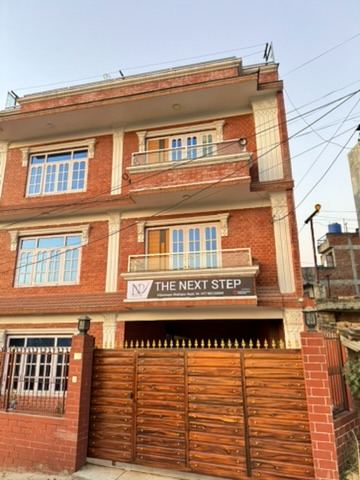
The Next Steps Home — a professionally structured residence for girls transitioning to college and career.{{ pr2Label }}
Hearts for Nepal USA has announced the launch of its Next Steps Home, a critical new initiative designed to provide continued care, housing, and development for young women who graduate from the organization’s rescue and education program.
For years, Hearts for Nepal has worked through legal channels to rescue vulnerable girls from extreme poverty and trafficking risk, particularly among Nepal’s marginalized Badi caste community. Many enter the hostel program as children and are provided safety, education, and holistic care through Grade 10. But in Nepal, Grade 10 often marks a dangerous crossroads — without continued support, many young women must return to the same environments from which they were rescued.
“We cannot help these girls only part of the way. The Next Steps Home ensures they never have to return to the poverty and exploitation they were rescued from.”— Dennis J. Cummins, President, Hearts for Nepal USA
A holistic model, unique in Nepal
The program does far more than provide shelter and schooling. Students receive high-quality education and English-language development, along with comprehensive care that includes medical, dental, vision, and orthodontic treatment. Beyond academics, Hearts for Nepal places strong emphasis on emotional intelligence, confidence, mentorship, and leadership development — even employing an Image Coach to help the young women develop professional poise.
“These girls are not statistics,” Cummins said. “They are future leaders, teachers, nurses, and professionals. Once they are rescued and given opportunity, our responsibility is to ensure they never have to return to the circumstances that once threatened their lives.”
The bridge between rescue and independence
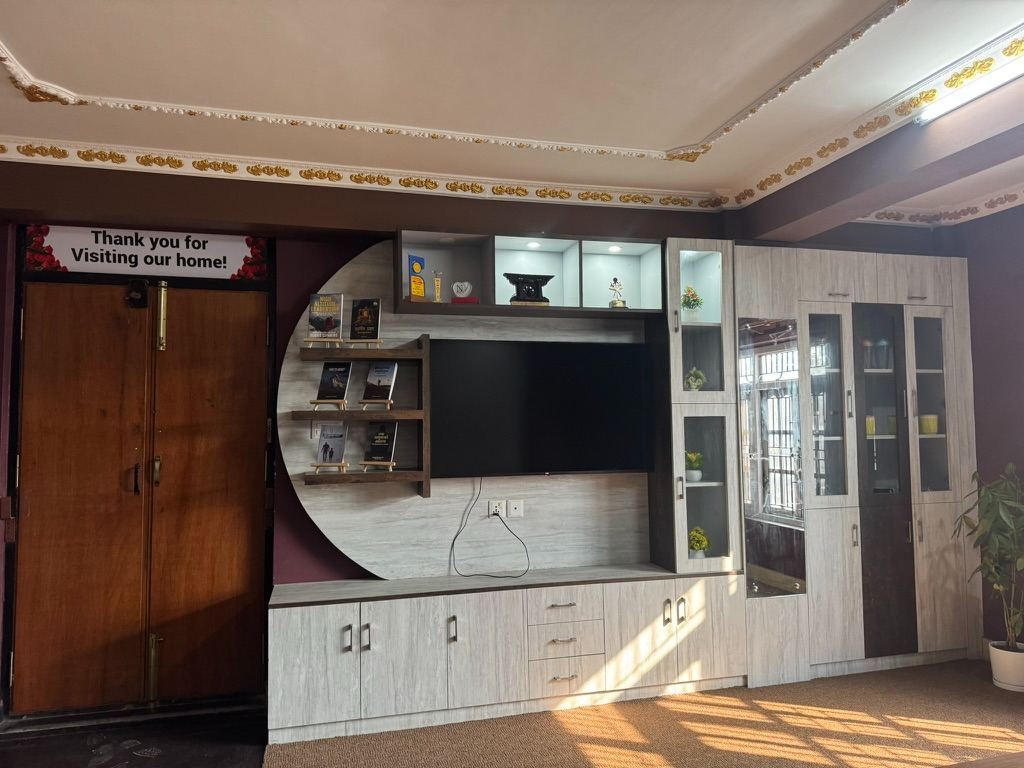
A warm, welcoming living space.A dedicated study space for college and career preparation.
The professionally structured residence will house graduates of the hostel program while they attend college or vocational training, giving them a stable, supportive environment to focus on higher education and career preparation without fear of regression into poverty. Foundational support for this work has come from partners including ExperienceChurch.tv, whose community has stood behind the mission with prayer, financial support, and advocacy.
“Real transformation takes time,” Cummins said. “Our mission is not simply rescue — it is restoration. Restoration means walking with these young women until they are equipped to build a life that is stronger than the poverty they came from.”